
Reviewed · COOKING CLASSES
Moroccan Cooking Class: Farm-to-Table Tagine
Leave Marrakech’s noise behind. This three-hour cooking class takes you to a working farm outside the city, where you prepare Moroccan tagine with fresh produce, local spices, and help from an English or French-speaking instructor. I like the hands-on cooking and the chance to see where some of the ingredients are grown. I also like that lunch is the food you prepare, served with bread, salads, olives, and fruit.
The main consideration is access. The class includes walking around a farm, and it is not suitable for wheelchair users or pregnant women. The meeting point at Hotel Ali can also be busy, so arrive 15 minutes early and make sure you know who is collecting you.
In This Review
- Key points to know before booking
- From Hotel Ali to a quiet farm outside Marrakech
- Mint tea beneath the olive trees
- Preparing tagine with fresh farm ingredients
- What happens while the tagine cooks
- Bread, olive oil, and local side dishes
- Eating your own tagine at the communal table
- Is $94 a fair price?
- Who will enjoy this class most?
- Practical tips for a smoother visit
- Should you book the farm-to-table tagine class?
- FAQ
- Where does the Moroccan cooking class meet?
- Is transportation included?
- How long does the activity last?
- Which languages does the instructor speak?
- What food will I prepare?
- Is lunch included?
- Can vegetarians or people with allergies take part?
- Is the activity suitable for wheelchair users or pregnant women?
Key points to know before booking
- Two tagines may be prepared: Depending on your group, you may cook chicken and vegetable versions side by side, with recipes suitable for vegetarians and some dietary needs.
- The farm is part of the experience: You can walk among olive and citrus trees, organic gardens, horses, donkeys, sheep, and peacocks.
- Hanna is a patient teacher: Her relaxed style, humor, and clear instructions work well for adults, families, and children.
- Lunch is included: Your cooked tagine is served at a communal table with homemade bread, local side dishes, salads, olives, and fruit.
- Transport is provided: Pickup and return from central Marrakech are included, with the meeting point in front of Hotel Ali.
- The setting is quiet and rural: This is a useful break from Marrakech’s crowded streets and busy medina.
From Hotel Ali to a quiet farm outside Marrakech
The outing begins in front of Hotel Ali, a central meeting point in Marrakech. Transportation to and from the farm is included, which matters because the class takes place outside the city rather than in a restaurant or cooking school.
Plan to arrive 15 minutes early. Hotel Ali sits in a busy area, and one participant found that a lack of mobile data made it difficult to receive pickup messages. A little advance planning helps: keep your phone charged, know the meeting point, and confirm the pickup details before the morning of the class if possible.
The ride is part of the change in mood. You leave behind the tight streets and constant activity of Marrakech for a more open farm setting. The drive itself is not presented as a sightseeing tour, but the change from city to countryside is one of the reasons this class feels different from a standard kitchen lesson.
Pickup and return have generally been well organized. Drivers have collected people on time, and one driver, Abdo, was praised for being friendly and helpful during the journey. The return trip may also take you close to your riad, though you should confirm the exact drop-off arrangements.
More Cooking Classes in Marrakech
- Marrakech: Moroccan Cooking Class with Pickup
★ 4.6 · 1,862 reviews - Marrakech: Traditional Moroccan Cooking Class & Market Visit
★ 4.8 · 1,861 reviews - Marrakesh: Moroccan Dishes Cooking Class with a Local Chef
★ 5.0 · 1,615 reviews
Mint tea beneath the olive trees
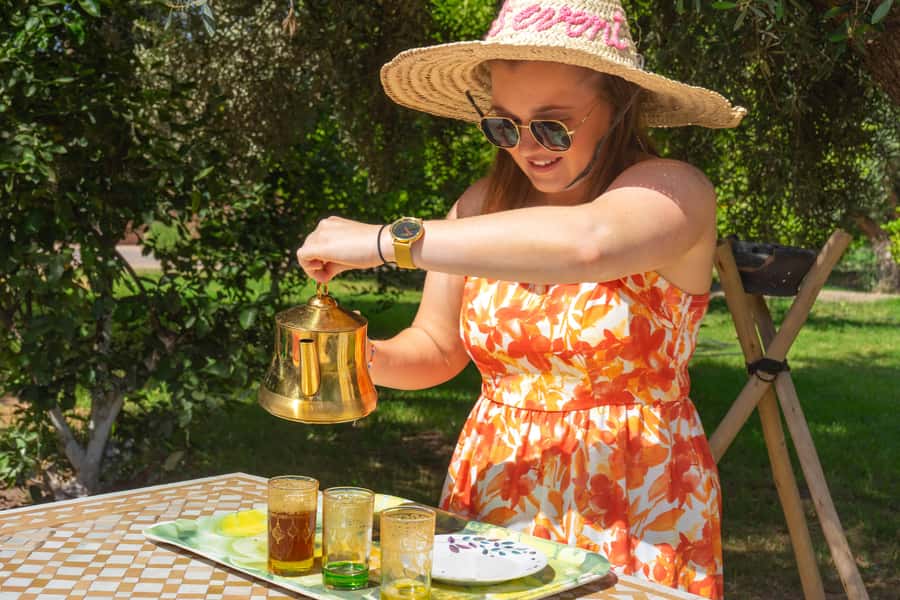
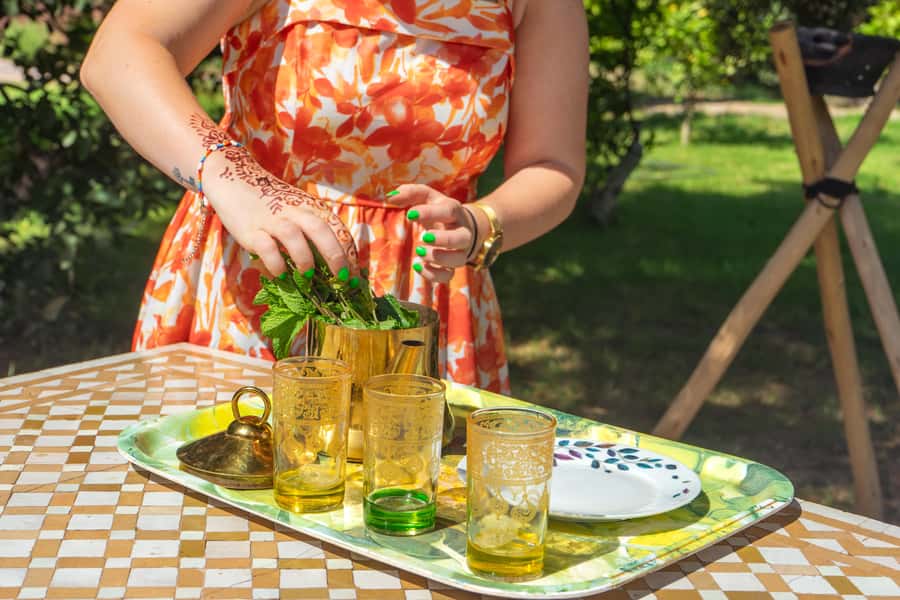
On arrival, you are welcomed with Moroccan mint tea under the olive trees. This is a good opening because it gives you time to settle in before the cooking begins.
The farm is run by a local family, and the class offers more than a recipe. You get a look at a working rural property, with gardens and animals forming part of the visit. The setting may include olive, lemon, orange, and clementine trees, along with open areas where peacocks walk freely.
The pace is one of the strongest features. You are not rushed straight into chopping vegetables. Instead, the tea and introduction set up the ingredients, cooking methods, and food traditions you will use later.
That relaxed start also suits families. Children between roughly school age and their teens have taken part, with the instructors giving them patient help. If your group includes children, the farm animals and outdoor space provide a welcome change from a long indoor class.
Preparing tagine with fresh farm ingredients
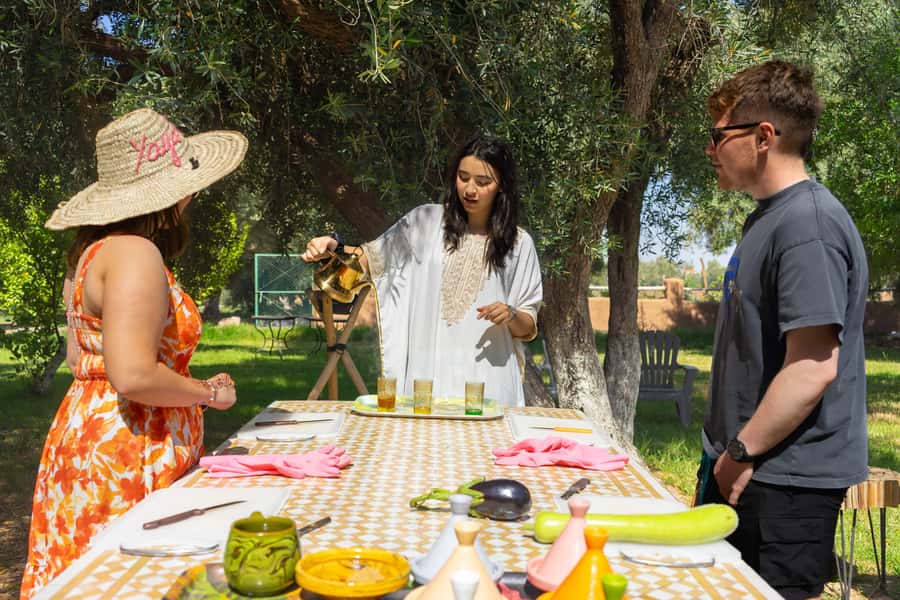
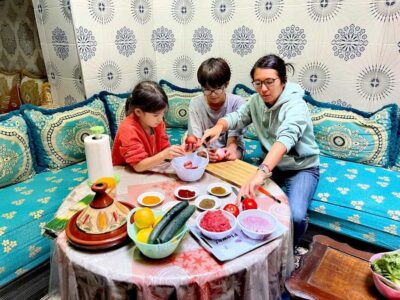
The cooking lesson begins with the basics of a Moroccan tagine. You select vegetables, work with spices, and layer the ingredients so the flavors develop slowly over the fire.
The class uses fresh, organic ingredients, with produce grown on the farm when available. That farm-to-table link gives the lesson a practical edge. You are not simply watching an instructor assemble a dish from premeasured items. You get to handle the ingredients and understand how the dish comes together.
The exact recipes can vary, but the class may include both a chicken tagine and a vegetable tagine. Vegetarian requirements have been accommodated, and one cooking session included a salad as well. If you have an allergy or a specific dietary need, tell the provider in advance so the instructor can plan accordingly.
Hanna is the instructor most often named in the experience details. She teaches in a friendly, patient way and adjusts her pace for the group. Some sessions are private, while others are made up of small groups. That makes the class feel more personal than a large demonstration where you stand at the back and hope to see the cutting board.
The recipes are also useful beyond the day itself. Hanna has provided recipes for the tagines prepared in class, along with other recipes, so you can try the dishes at home. One particularly useful sign is that home attempts using her instructions have turned out well. For a cooking class, that is a better measure than simply enjoying lunch on the farm.
What happens while the tagine cooks
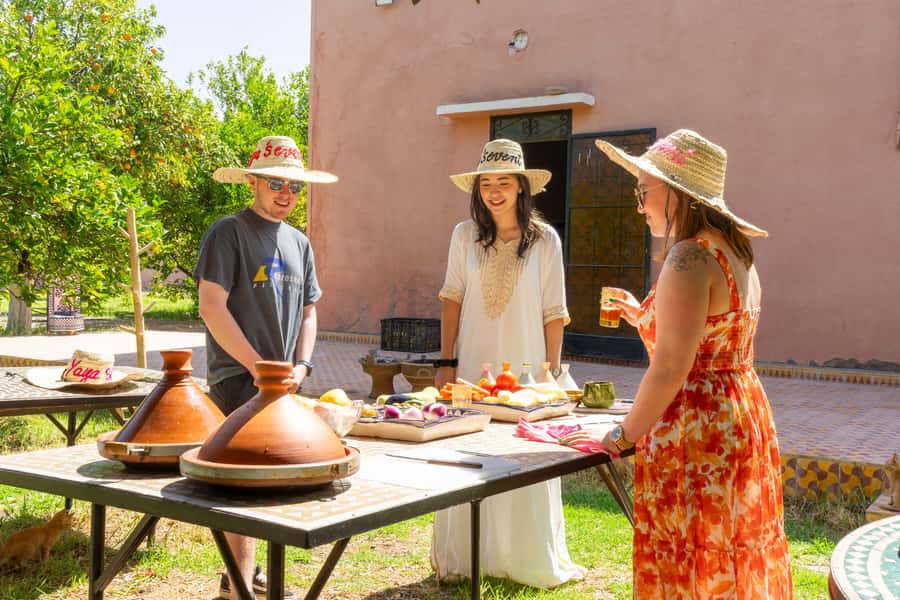
Tagine is a slow-cooked dish, so the cooking time creates space for the rest of the farm visit. Rather than sitting around waiting for lunch, you take a walk through the property and see the gardens and seasonal produce.
The farm may include racing horses, donkeys, sheep, and peacocks. You can meet the animals and walk among the trees and planted areas. The horse farm setting adds a detail you would not get from a cooking lesson in the medina.
This part is especially valuable after the practical cooking work. It shows how food fits into daily life on the property, and it gives you time to ask questions about the farm, local produce, and Moroccan food traditions.
It is also worth setting your expectations correctly. This is a farm walk connected to a cooking class, not a formal agricultural tour. You should expect a guided look around the grounds rather than a long technical explanation of organic farming or horse training.
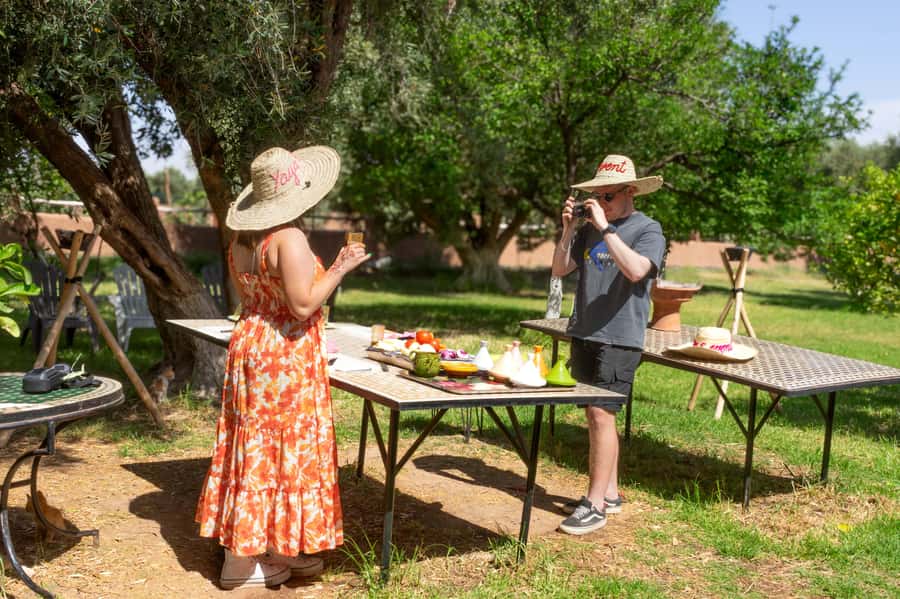
Bring water, sunscreen, and a hat. The class takes place outdoors, and comfortable clothing and shoes are important for walking around the farm. A camera is useful for the trees, gardens, animals, and cooking setup, but keep it secondary to the lesson.
Same city gate, a very different afternoon:
- Marrakech: Agafay Desert Sunset, Camel Ride, and Dinner Show
★ 4.6 · 35,119 reviews - From Marrakech: Ouzoud Waterfalls Guided Hike and Boat Trip
★ 4.7 · 33,630 reviews - Marrakech: Agafay Desert Quad & Camel Rides with Dinner Show
★ 4.8 · 27,382 reviews - Marrakech: Agafay Desert Quad Biking Tour with Dinner-Show
★ 4.8 · 16,569 reviews
Bread, olive oil, and local side dishes
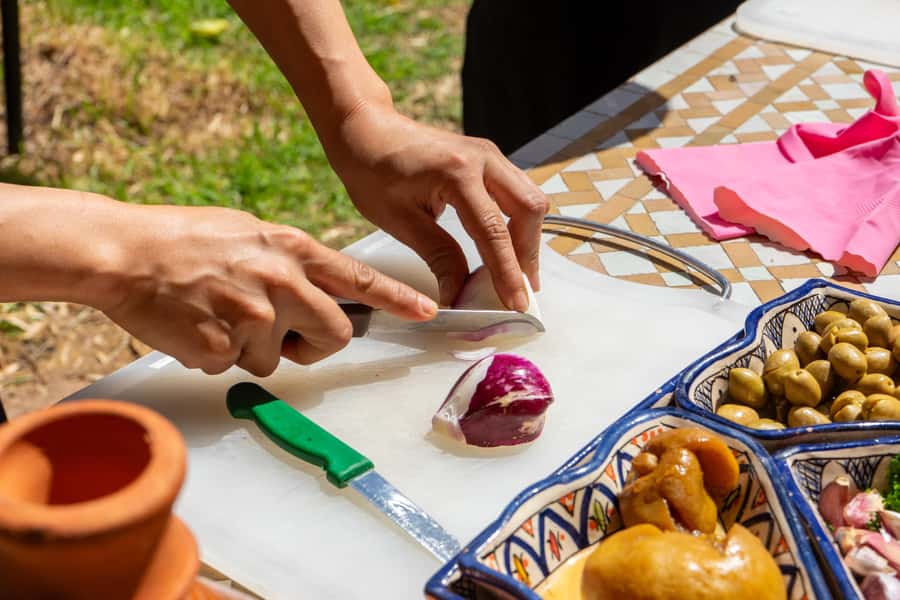
While the tagine cooks, you are served tastings of homemade bread, olive oil, and local side dishes. These small plates help you understand how Moroccan meals are normally enjoyed. Bread is not just an extra on the table. It is part of the meal and a practical way to enjoy the sauce.
The lunch may also include fresh salads, olives, and fruit for dessert. These additions keep the meal from being just one heavy dish and give you a fuller sense of a Moroccan table.
I like this format because the tasting comes before the main meal, so you have something to enjoy while the tagine finishes. It also lets you compare the cooked dish with the fresh ingredients used around it.
The food is a major reason to book, but the value depends on what you want from a cooking class. If you want a polished restaurant meal with no participation, this is not the right format. You will be chopping, seasoning, and helping with the preparation. If you enjoy learning by doing, the lunch feels like a satisfying payoff.
Eating your own tagine at the communal table
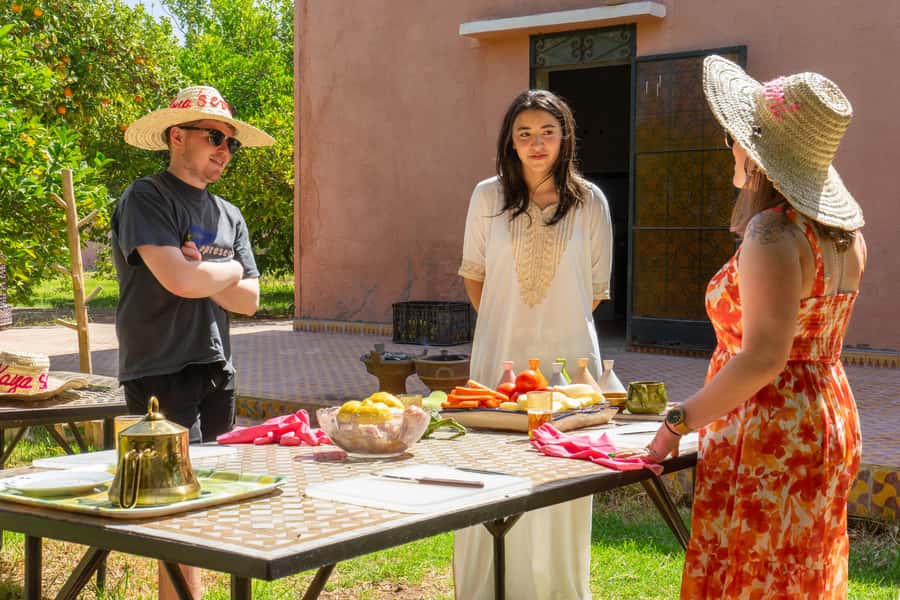
The final meal is served around a communal table, with the tagine you helped prepare at the center. This shared format fits the food. Moroccan tagine is meant to be enjoyed slowly, with bread, salads, olives, and conversation.
The meal may include both chicken and vegetarian preparations, depending on the class arrangement. Having two versions prepared is useful for families or mixed groups because everyone gets a choice.
The atmosphere is informal and social. Some groups have had the class to themselves, including solo participants and couples. Others have shared the experience with another couple or a small family group. The available group format can affect the mood, so choose a private option if you want a more personal lesson.
The setting does much of the work here. Eating beneath or near the olive trees, after walking through the farm and helping with lunch, feels more connected to the place than eating the same dish in a city restaurant. You are not only learning what goes into tagine. You are seeing the surroundings in which the ingredients are grown and the meal is prepared.
Is $94 a fair price?
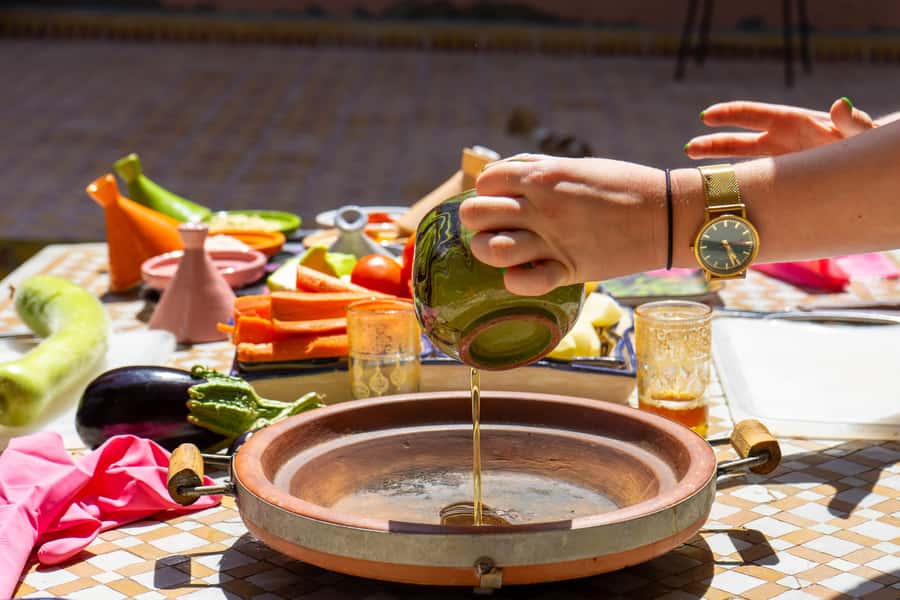
At $94 per person, this is not the cheapest meal or cooking lesson in Marrakech. The price makes more sense when you count what is included: return transportation, a local instructor, fresh ingredients, the cooking class, a farm walk, tastings, and lunch.
You are paying for a half-day outing rather than a single restaurant meal. The quiet farm setting is a real part of the value, especially if you are staying in the medina and want a break from city noise.
The class also offers personal instruction. Hanna and the other hosts work directly with participants, and families have received help at a comfortable pace. That is more useful than a large group lesson where you watch from a distance.
The value is strongest for people who will use what they learn. If you enjoy taking recipes home, the class gives you a practical souvenir rather than another decorative object. The ability to prepare chicken and vegetable tagines, salads, or related dishes later adds lasting value.
Still, keep the limitations in mind. The activity lasts three hours, so it is not an all-day rural tour. The exact amount of cooking you do can depend on the group, and outdoor conditions may be warm. You also need to be comfortable walking around a farm.
Who will enjoy this class most?
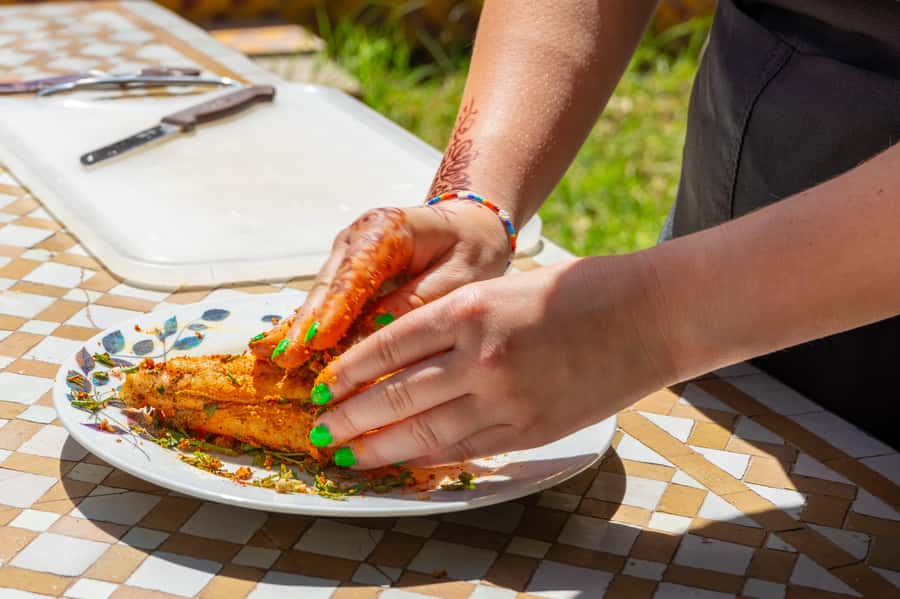
I would recommend it most strongly to food-focused visitors who want to understand Moroccan cooking through their hands, not just through a restaurant menu. Couples, solo visitors, and families can all fit well, especially when the group is small or private.
Families with children may find the animal visit just as memorable as the food. The instructors have been patient with children, and the farm gives younger participants room to stay interested while the tagine cooks.
It is also a good choice for anyone who needs a quieter day outside Marrakech. The olive groves, gardens, and animals create a calmer setting without requiring a full countryside excursion.
You should think twice if you dislike outdoor activities, want a highly formal cooking school, or have difficulty walking on uneven farm ground. The class is not suitable for wheelchair users or pregnant women. Smoking and pets are not allowed.
The language options are English and French. If you need another language, this activity may not be the best fit.
Practical tips for a smoother visit
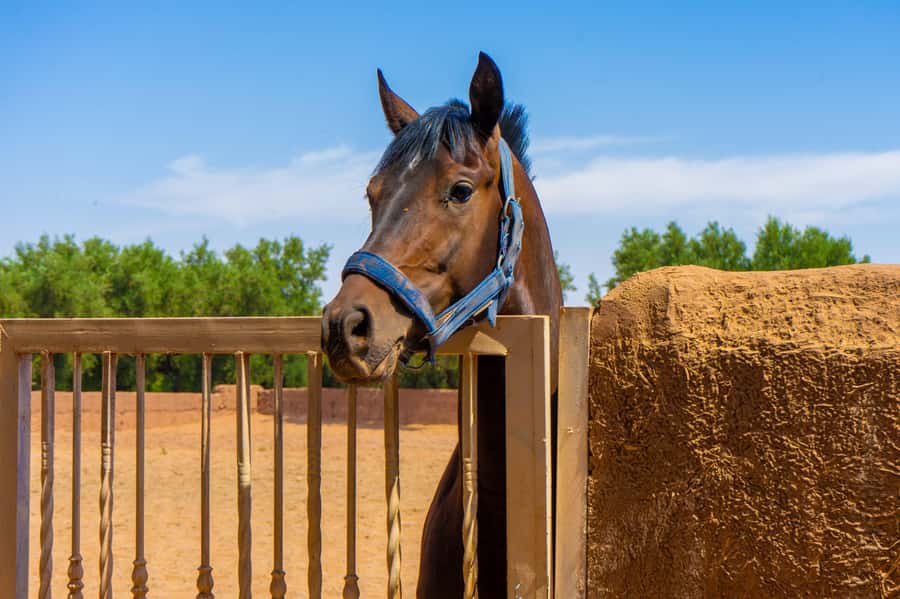
Wear light, comfortable clothes and shoes suitable for walking. You may spend time outside under the sun, so a hat, sunscreen, and water bottle are worth packing.
Bring a camera, but protect it from dust and keep your hands free during the cooking work. The farm, animals, trees, and open-fire cooking area offer good photo opportunities.
Tell the provider about vegetarian needs or allergies before the class. The instructors have accommodated these requests, but advance notice gives them a better chance to prepare the right ingredients.
If you have a flight later that day, allow plenty of extra time. Hanna has helped coordinate timing for someone flying out that day, but you should not build a tight airport schedule around a farm outing.
The cancellation terms are friendly: you can cancel up to 24 hours before the activity for a full refund. You can also reserve now and pay later, which helps if your Marrakech plans are still shifting.
Should you book the farm-to-table tagine class?
Book this class if you want a practical food lesson, a peaceful farm visit, and a proper lunch in one outing. The best parts are the patient teaching from Hanna, the fresh ingredients, the chance to prepare chicken and vegetable tagines, and the walk among the trees and animals.
At $94, the price is reasonable when you use the included transport and count the meal, tastings, instruction, and farm visit. I would choose it over a basic city cooking class if you value rural Morocco and want recipes you can try at home.
Skip it if you need wheelchair access, cannot walk around a farm, or prefer a quick indoor demonstration. For everyone else, this is a warm, personal way to spend three hours outside Marrakech, with a meal you help make from start to finish.
FAQ
Where does the Moroccan cooking class meet?
The meeting point is in front of Hotel Ali in Marrakech.
Is transportation included?
Yes. Transportation to and from the farm is included.
How long does the activity last?
The cooking class and farm visit last three hours.
Which languages does the instructor speak?
The instructors speak English and French.
What food will I prepare?
You will learn to prepare a traditional Moroccan tagine using fresh ingredients. Depending on the group, the class may include chicken and vegetable tagines, and a salad may also be prepared.
Is lunch included?
Yes. Lunch includes the tagine you prepare, along with homemade bread, local side dishes, salads, olives, and fruit.
Can vegetarians or people with allergies take part?
Vegetarian needs and allergies have been accommodated. Tell the provider about your requirements before the class so the food can be arranged appropriately.
Is the activity suitable for wheelchair users or pregnant women?
No. The activity is not suitable for wheelchair users or pregnant women. Comfortable clothing and shoes suitable for walking around the farm are recommended.
More Workshops in Marrakech
- Moroccan Cooking Class & Marrakech Market Visit with Chef Khmisa
★ 5.0 · 1,504 reviews - Half-Day Cooking Class with Local Chef Laila in Marrakech
★ 5.0 · 952 reviews - Marrakech: Pottery Workshop with Moroccan Tea
★ 4.8 · 756 reviews - Marrakech: Moroccan Cooking Class with a Local Family
★ 4.9 · 668 reviews
More Farms in Marrakech
Just listed around Marrakech
- 3 Days To Merzouga Desert★ 5.0 · 19 reviews
- 3 Days Shared Sahara Desert Tour From Marrakech★ 5.0 · 78 reviews
- 1 night Camel Treking in Merzouga Desert Luxury Camp★ 5.0 · 132 reviews
- 3 Days Sahara Desert Trips From Marrakesh★ 5.0 · 176 reviews
- 3 Days Sahara Tour from Marrakech to Merzouga Dunes★ 5.0 · 29 reviews
- trip of your dreams in 3 days and 2 nights in the desert★ 5.0 · 36 reviews
- 3 Days Private Tour to Merzouga Desert from Marrakech★ 5.0 · 77 reviews
- 3 Day Sahara Desert Tour From Marrakech★ 5.0 · 49 reviews
Cooking Classes, compared.
Traditional Moroccan Cooking Class & Market Visit
Read our review →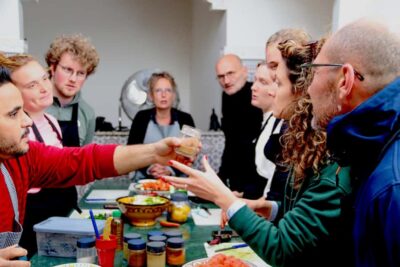
Moroccan Dishes Cooking Class with a Local Chef
Read our review →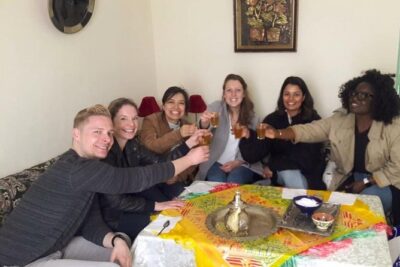
Moroccan Cooking Class & Marrakech Market Visit with Chef Khmisa
Read our review →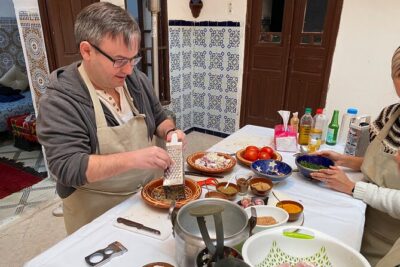
Half-Day Cooking Class with Local Chef Laila in Marrakech
Read our review →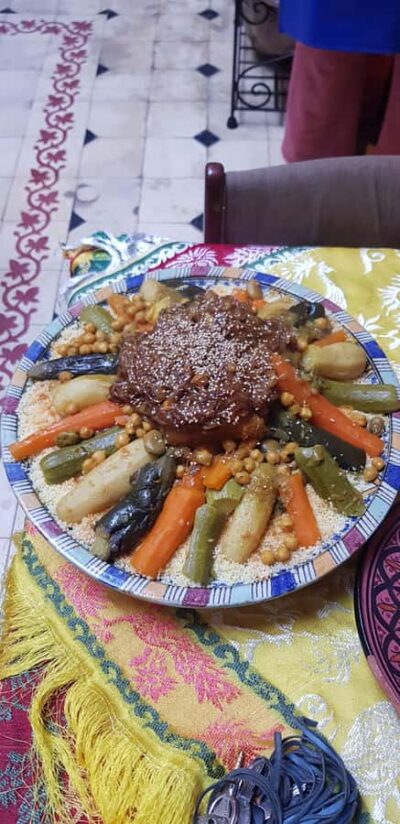
Browse the lists this tour appears in