
Reviewed · FOOD & DRINK
Moroccan Food Tasting Tour and Dinner
Come hungry, leave happily full. This three-hour evening tour brings you from Jemaa el-Fnaa into Marrakech’s food stalls, olive souks, spice shops, and a sit-down Moroccan dinner, with a local guide explaining what you are eating along the way. I like the broad range of samples, from pancakes and soups to snails and pastries, and I like that the tour gives you a friendly introduction to the medina rather than keeping you at one restaurant. The main caution is that the food comes quickly and in large amounts, so eat very lightly beforehand.
The experience costs $174.47 per person, which is not cheap for a three-hour meal, but the price covers many tastings, a full dinner, guiding, and a private experience for your group. You should also expect stairs and uneven paths in the souks, so this is not the best choice if walking is difficult.
In This Review
- Key points at a glance
- Starting at Jemaa el-Fnaa at 6:00 p.m.
- Exploring the medina’s food lanes
- Moroccan spices, argan oil, and amlou
- Evening food stalls in Jemaa el-Fnaa
- Pastries and olives in Souk Semmarine
- The sit-down Moroccan dinner
- What makes the guide important
- Is $174.47 good value?
- Who should book this food tour?
- Should you book it?
- FAQ
- How long does the Moroccan food tour last?
- What time does the tour begin?
- Where does the tour meet?
- Where does the tour end?
- What food is included?
- What does the dinner include?
- Is this a private tour?
- Is the tour accessible to everyone?
- Can I cancel for a full refund?
Key points at a glance
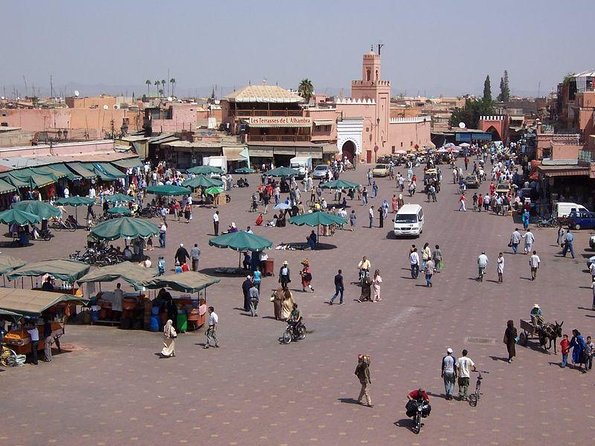
- Start with Marrakech’s famous evening square: Meet at Café de France beside Jemaa el-Fnaa at 6:00 p.m., then explore the square as its food stalls and performers come to life.
- Taste far beyond the usual tagine: Samples can include Moroccan pancakes, soups, olives, dried fruit, pastilla, snails, dates, chebbakia, macarons, and pastries.
- A local guide gives the food context: Hassan, Ali, Mohammed, Souf, and Hussain are named in guest feedback, with particular praise for clear explanations and friendly service.
- The medina is part of the meal: You visit olive sellers, spice shops, food stores, and pastry vendors while learning how local families shop and cook.
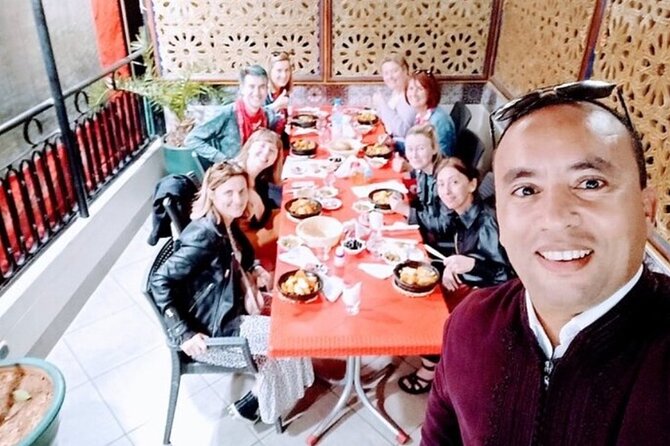
- Dinner comes after the sampling: The final meal includes Moroccan salad, tanjia or tagine, dessert, tea or coffee, and sparkling water.
- Plan your timing carefully: The tour runs for about three hours, ends where it begins, and is often booked well ahead, with an average booking time of 40 days.
Starting at Jemaa el-Fnaa at 6:00 p.m.
Your meeting point is Hôtel Restaurant Café de France, at the edge of Jemaa el-Fnaa. This is a sensible place to begin because the square is easy to locate and close to public transportation. You do not need to spend the first part of the evening trying to find a restaurant tucked into a maze of lanes.
At around 6:00 p.m., Jemaa el-Fnaa is changing character. The square has long served as a meeting point for people arriving in Marrakech, and at night it becomes a stage for food sellers, musicians, storytellers, dancers, acrobats, and other performers. Your guide helps you read the scene and points out how the square functions as both a social space and a place to eat.
The first stop lasts about 50 minutes and includes admission. Do not think of this as a formal historical tour with long lectures. The value is practical: you get your bearings, learn how the square works, and begin tasting as the evening gets underway.
The square can be noisy and crowded. That is part of its appeal, but it also means you should stay close to your guide and keep your phone and wallet secure. The tour’s stated skip-the-line and crowd-avoidance features may help at selected stops, but they do not turn Jemaa el-Fnaa into a quiet place.
More Food Tours in Marrakech
- From Marrakech: Merzouga 3-Day Desert Safari with Food
★ 4.7 · 12,232 reviews - Marrakech: Street Food Tour with a Local Guide
★ 4.9 · 3,119 reviews - Marrakech: Street Food Tour by Night
★ 4.8 · 2,838 reviews
Exploring the medina’s food lanes
From the square, the tour moves into the Medina of Marrakesh. This one-hour section focuses on the food shops, olive sellers, and less obvious corners that are easy to miss when you are simply wandering between carpet and clothing stalls.
You visit an olive souk with colorful displays and sample olives seasoned with olive oil and spices. Olives are a useful introduction to Moroccan cooking because they appear in small plates, salads, tagines, and snacks. Instead of treating them as a quick nibble, your guide can explain the differences in flavor and preparation.
The food lanes also show how each part of the medina has its own purpose. Some alleys focus on spices, while others sell ingredients used in home cooking. You may see dried fruit, nuts, pastries, and other foods that are not always obvious to someone who has just arrived in Morocco.
I like this part because it connects the meal to ordinary shopping. A restaurant can serve you a perfect tagine, but a market visit explains where the olives, spices, dried fruit, and oils come from. If you plan to cook Moroccan dishes at home, this is also the point where you can ask about ingredients and perhaps buy a few items for later.
The drawback is physical rather than culinary. One guest specifically noted lots of stairs, and medina paths are not designed for easy access. You should be comfortable walking for much of the evening over uneven surfaces and moving through narrow lanes.
Moroccan spices, argan oil, and amlou
The next 30-minute stop takes you to an authentic spice shop used by local shoppers. Here the focus shifts from finished food to the ingredients that give Moroccan cooking its character.
You taste pure edible argan oil, amlou, and Moroccan mint tea. Amlou is a spread made from argan oil, almonds, and honey, and it is often served with bread or pancakes. It gives you a chance to compare a nutty, sweet preparation with the sharper flavors of olives and spices tasted earlier.
The spice stop is also useful because Moroccan food is often reduced to a short list of familiar words, especially tagine and couscous. In practice, flavor comes from combinations of spices, herbs, oils, preserved ingredients, and cooking methods. Your guide can explain the role of these ingredients and answer questions about quality.
This is where Hassan has received especially strong praise for giving clear explanations and speaking excellent English. Other named guides include Ali, Mohammed, Souf, and Hussain. The exact guide may vary, but the food tour is designed around personal explanation rather than a silent march from one snack to the next.
You should still use good judgment in a spice shop. If you enjoy the products, you may be offered items to buy. Buying is not listed as part of the tour, so do not feel that you must purchase anything to enjoy the tasting.
Evening food stalls in Jemaa el-Fnaa
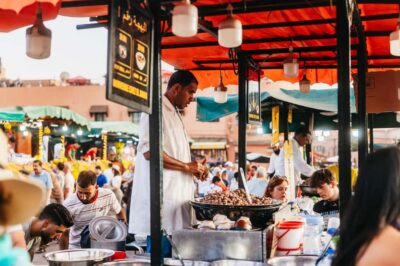
The group returns to Jemaa el-Fnaa for about 20 minutes of food-stall tasting. This is a different experience from the opening walk because you now have some context for the food and know what questions to ask.
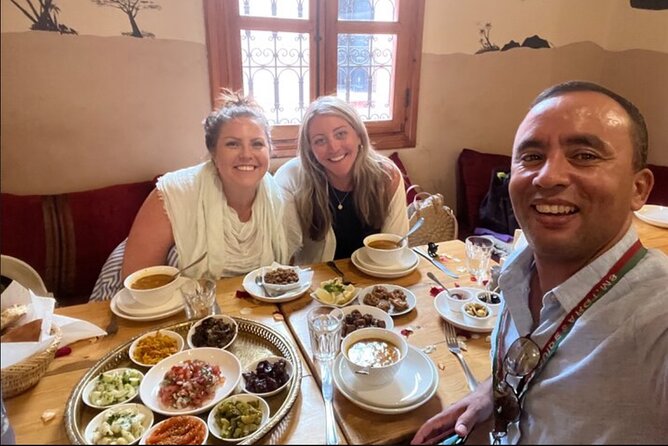
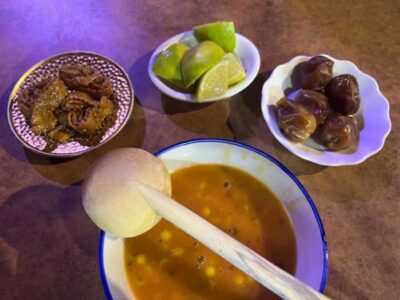
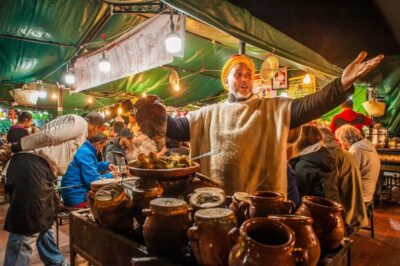
The selection can include Moroccan soups served with dates and chebbakia, a sweet sesame pastry often associated with Ramadan, and barbouch, or snails, cooked with spices. You may also sample cactus, meats, olives, nuts, and other small portions, depending on what is available during the evening.
The snails are one of the more distinctive tastings. They are not a required favorite, but they are exactly the sort of local food that many people would miss without a guide. You can ask about the broth, seasoning, and the best way to eat them before deciding how much to try.
Street food requires a little flexibility. The precise offering can change, and the schedule may shift slightly depending on the stalls and the pace of the group. That is normal for an evening food walk. You are paying for access to a range of local tastes, not a fixed restaurant menu prepared in advance.
More dinners out in Marrakech:
- Marrakech: Agafay Desert Sunset, Camel Ride, and Dinner Show
★ 4.6 · 35,119 reviews - Marrakech: Agafay Desert Quad & Camel Rides with Dinner Show
★ 4.8 · 27,382 reviews - Marrakech: Agafay Desert Quad Biking Tour with Dinner-Show
★ 4.8 · 16,569 reviews - Marrakech: Agafay Desert Quad & Camel Rides with Dinner Show
★ 4.9 · 10,771 reviews
Pastries and olives in Souk Semmarine
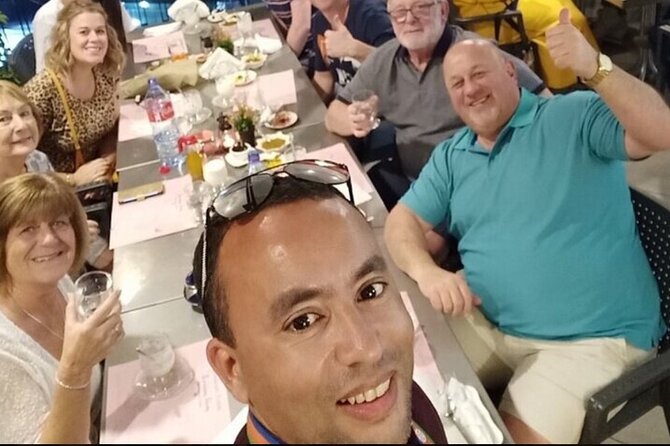
The route continues through Souk Semmarine for about 20 minutes. This section centers on Moroccan pastries and olives in what is described as an authentic, tucked-away olive market.
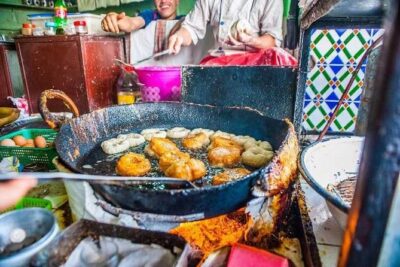
Pastries add another side of Moroccan food culture. Along with selected Moroccan pastries, the tasting list includes macarons, dried fruit, nuts, and pancakes served with honey and cheese or with onion and spices. The pancake stop is particularly useful because it shows how one basic food can move from sweet to savory.
You may also sample pastilla made with chicken and almonds. Pastilla combines a crisp pastry exterior with a savory filling and sweet-spiced notes, making it one of the more memorable dishes on the route. It is more substantial than a simple bite, so keep some room for dinner.
This part of the tour can feel like a moving snack table. That is good news if you enjoy variety, but it can be too much if you prefer a slow meal with long pauses. The repeated advice is simple: do not eat a large lunch or early dinner before you arrive.
The sit-down Moroccan dinner
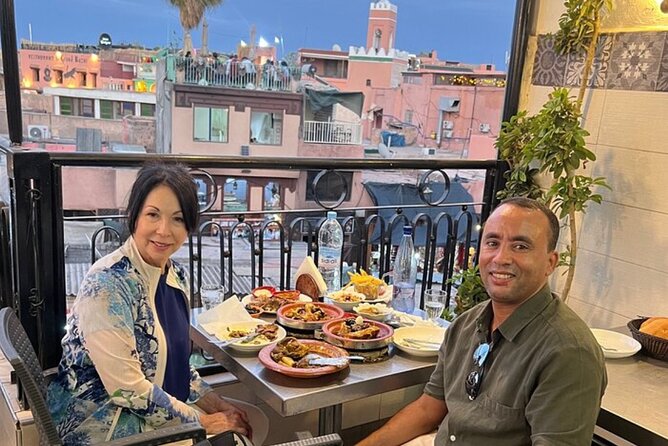
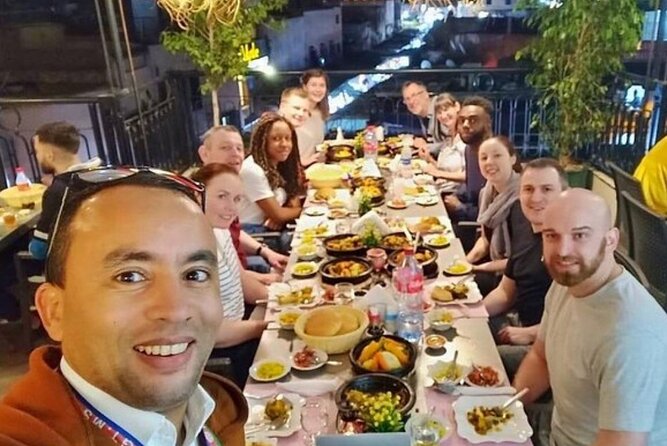
The final meal is the main event. The included dinner consists of Moroccan salad, a choice of tanjia or tagine, dessert, Moroccan tea or coffee, and sparkling water.
Tagine is the better-known option, cooked slowly in the distinctive cone-shaped vessel. Tanjia is a Marrakech specialty, traditionally associated with slow cooking and the city’s male workers’ cooking tradition. Having the choice between the two gives you a chance to try a dish that may be less familiar than the standard tourist menu.
The meal follows a long sequence of tastings. You may already have tried soup, pancakes, olives, pastilla, dried fruit, pastries, and snails before sitting down. Several people have described the dinner as a full four-course meal after more than ten earlier samples, so treat the tasting stops as real food, not decorative appetizers.
Some guides finish the route at a terrace or a sit-down restaurant. The provided plan says the activity ends back at the original meeting point, so confirm the exact dinner setting with Sara Morocco Private Tours if that detail matters to you. Either way, you should expect the food portion to be generous rather than minimalist.
Moroccan mint tea is part of the experience, not just a drink at the end. It gives you a calmer finish after the noise and movement of the square. Coffee is also included, along with sparkling water.
What makes the guide important
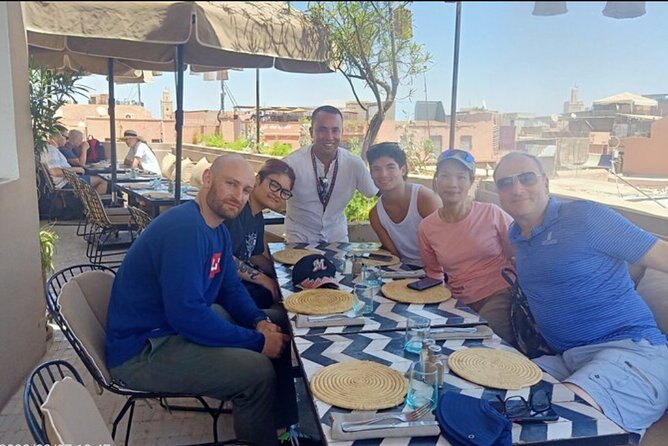
The guide is the difference between a useful food tour and an expensive sequence of samples. The strongest praise goes to guides who explain the ingredients, answer questions, and introduce small shops and vendors you might not identify on your own.
Hassan is described as friendly, transparent, and able to tailor the route to what your group wants to see. Ali is praised for being informative and approachable. Mohammed is credited with explaining the souks and market areas, while Souf helped connect food with Moroccan culture. Hussain was also praised for taking care with the group despite very hot weather.
These details matter because the tour is not built around a printed menu. Your understanding depends on the guide’s explanations at each stop. Ask direct questions about spice blends, cooking methods, the difference between tanjia and tagine, and how to recognize good olives or argan oil.
This is a private activity, so only your group participates. That can make the price easier to justify for a family or group of friends, especially if a group discount applies. It also gives you more room to slow down, ask questions, or mention dietary preferences, although specific dietary accommodations are not stated and should be requested before booking.
Is $174.47 good value?
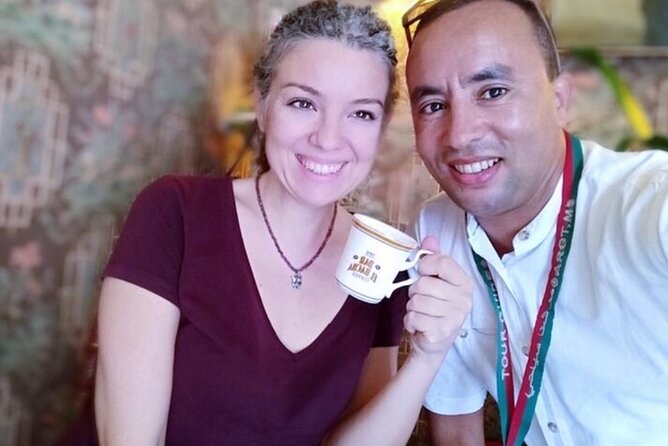
At $174.47 per person, this is a premium food walk. You could eat a Moroccan dinner for much less, especially if you choose a simple local restaurant. The value comes from the full package: a local guide, several market areas, many tastings, a full dinner, drinks, and a private setting.
I would not book this tour only for the quantity of food. You can find cheap meals in Marrakech without paying for a guide. I would book it if you want help understanding what you are eating and would like a structured first evening in the medina.
The tour is often reserved around 40 days ahead, which suggests you should not leave it until the last day of a short visit. Scheduling it near the beginning of your stay is smart. You can use the rest of the trip to return to foods and shops that caught your interest.
The experience also offers group discounts, making the per-person cost more reasonable when shared by several people. Since the activity is private, the value improves if you are traveling with a small group rather than booking alone.
Who should book this food tour?
I would recommend it to first-time visitors who want a gentle introduction to Marrakech’s food scene without having to choose every shop themselves. It suits curious eaters who want to try unfamiliar items such as snails, amlou, cactus, chebbakia, and tanjia.
It is also a good fit for people who like markets but do not want a shopping tour. The focus remains food, ingredients, and local eating habits.
Families and groups of friends may find the private format useful, particularly when some people are adventurous eaters and others are cautious. You can ask the guide questions as you go instead of relying on a large group’s schedule.
I would think twice if you need step-free access, dislike crowded evening squares, or prefer a quiet restaurant meal. The route includes stairs and a lot of walking, and the food arrives in enough quantity to challenge anyone who has already eaten.
Bring comfortable shoes, arrive at Café de France a little early, and keep your afternoon meal small. The tour finishes at the original meeting point, which makes it easier to continue your evening from a familiar location.
Should you book it?
Book this tour if you want many local tastings plus a full dinner, not just one restaurant meal. Its best feature is the combination of food and place: you sample what is sold in the medina while learning how the markets, spice shops, and family cooking traditions fit together.
The $174.47 price is easier to defend for a private group that values guidance and variety. For a solo diner on a tight budget, it is harder to justify. Book at least a few weeks ahead if the 6:00 p.m. start suits your plans, and leave room in your stomach for what may be ten or more tastings before dinner.
FAQ
How long does the Moroccan food tour last?
The tour lasts approximately three hours.
What time does the tour begin?
It starts at 6:00 p.m.
Where does the tour meet?
The meeting point is Hôtel Restaurant Café de France, beside Jemaa el-Fnaa on Rue des Banques in Marrakech.
Where does the tour end?
The activity ends back at the original meeting point.
What food is included?
Included tastings can include Moroccan pancakes, pastilla with chicken and almonds, soups with dates and chebbakia, spiced snails, olives, dried fruit, pastries, macarons, argan oil, amlou, and mint tea.
What does the dinner include?
Dinner includes Moroccan salad, tanjia or tagine, dessert, Moroccan tea or coffee, and sparkling water.
Is this a private tour?
Yes. Only your group participates in the activity.
Is the tour accessible to everyone?
Most people can participate, but the route includes stairs and medina walking. It may not be suitable if you need easy or step-free access.
Can I cancel for a full refund?
Yes, if you cancel at least 24 hours before the local start time. Cancellations made less than 24 hours ahead are not refunded. If poor weather causes the tour to be canceled, you will be offered another date or a full refund.
More Places to Eat in Marrakech
- Marrakech: Agafay Desert Quad, Camel Ride & Dinner Show
★ 4.7 · 10,209 reviews - Marrakech: Agafay Desert Retreat, Tent, Dinner, Show & Pool
★ 4.8 · 5,616 reviews - Marrakech: Agafay Desert Dinner Show with Quad Bike & Camel
★ 4.9 · 5,058 reviews - Agafay Desert Package, Quad Bike, Camel Ride and Dinner Show
★ 5.0 · 4,244 reviews
Just listed around Marrakech
- Zagora: 2-Day Desert Trip from Marrakech★ 4.4 · 31 reviews
- Traditional spa Hammam & Massage with Hotel Transfers★ 4.0 · 24 reviews
- Day trip to OUZOUD waterfall with guide&boat ride from Marrakech★ 5.0 · 172 reviews
- walking tour★ 5.0 · 46 reviews
- quad bike tour in the palmeraie of Marrakech★ 4.5 · 43 reviews
- Half day quad desert agafay★ 4.5 · 24 reviews
- private tour of Marrakech 4 hours with multilingual driver★ 5.0 · 117 reviews
- 3 days tour from Marrakech to Merzouga desert★ 5.0 · 55 reviews
Food & Drink, compared.
3-Day Tour to Merzouga Erg Chebbi with Food & Camel Trek
Read our review →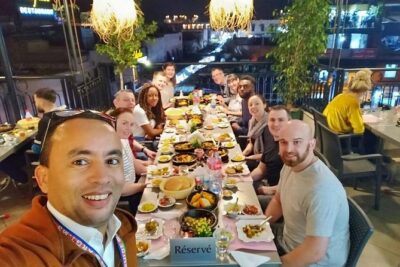
Authentic Moroccan Food Tour in Marrakech with Dinner
Read our review →
Browse the lists this tour appears in