
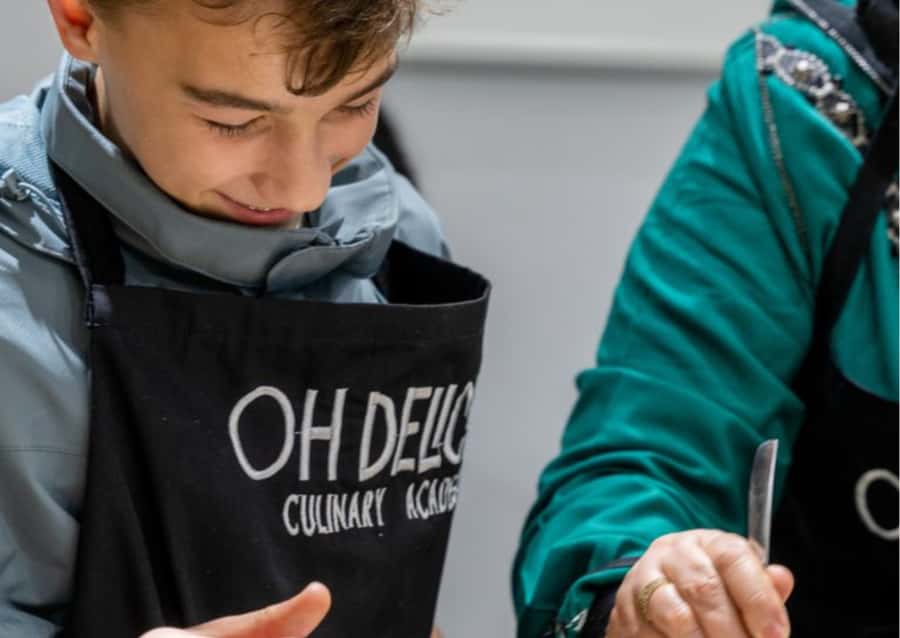
Reviewed · COOKING CLASSES
Rabat: Authentic Moroccan Cooking Class with Expert Chefs
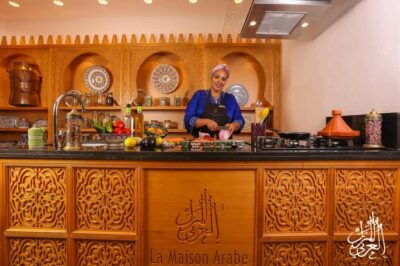
Come hungry, leave with recipes. This three-hour class at OhDelices Culinary Academy gives you a hands-on introduction to Moroccan cooking, from spice blending to tagine, bread, dessert, and mint tea. I like the small group limit of 10 and the chance to cook with local chefs and dadas rather than simply watch a demonstration. I also like that the meal you prepare becomes your lunch or dinner.
The main consideration is that the menu can change with the group. You may request dishes, but the final plan depends on what other people want to cook. Also, the cooking scents cling to clothing, so wear something washable rather than your best travel outfit.
In This Review
- Key points before you book
- Arriving at OhDelices Culinary Academy
- Meeting the chefs and choosing the menu
- Learning how Moroccan spices build flavor
- Preparing starters, tagines, and bread
- Making dessert, then sitting down to eat
- What the small group changes
- The people who make the class work
- Is $65 a fair price in Rabat?
- Who should book this cooking class?
- Should you book it?
- FAQ
- How long does the cooking class last?
- How much does the class cost?
- What food might I prepare?
- Is a meal included?
- Are ingredients and cooking equipment provided?
- What languages are available?
- Is the class wheelchair accessible?
Key points before you book
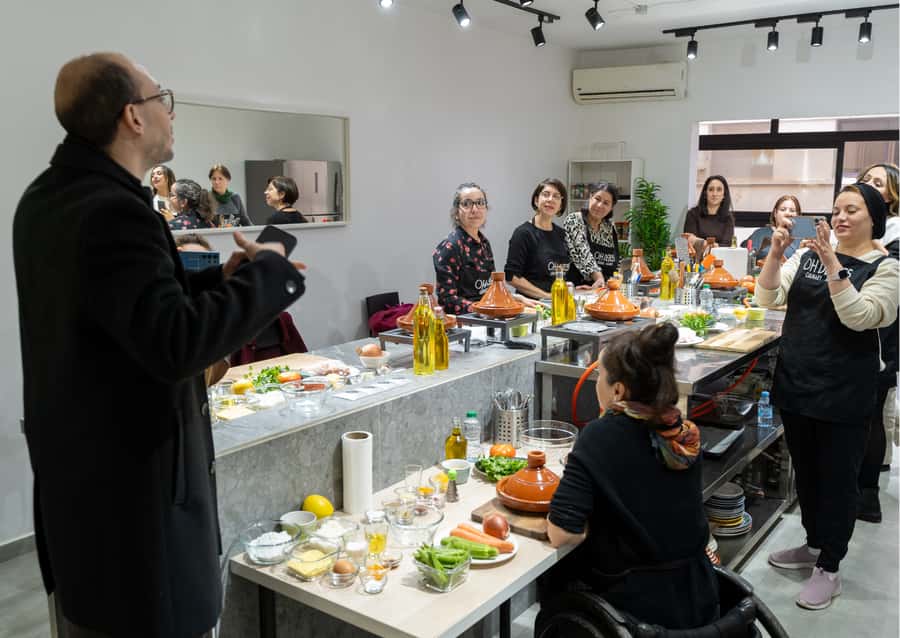
- Three hours of real kitchen time: You prepare a full meal instead of sitting through a short demonstration.
- Small groups of up to 10: The size allows for guidance from the chef and help with individual tasks.
- Special Moroccan ingredients: You may work with preserved lemon, fermented butter, fresh spices, and other items that are not always easy to find at home.
- Language support is built in: Classes are offered in Arabic, English, and French, with translation available for English sessions.
- Your cooking becomes the meal: The class includes appetizers, a main course, dessert, mint tea, and recipes to take home.
- Good value at $65: Ingredients, equipment, instruction, the meal, and tea are included, but transport to the studio is not.
Arriving at OhDelices Culinary Academy
The class takes place at OhDelices Culinary Academy in Rabat-Salé-Kénitra. The building is next to the Goethe Center, which is the most useful landmark for finding the meeting point.
Transportation is not included, so you need to arrange your own way there. Give yourself enough time to locate the building, especially if you are not familiar with Rabat. The meeting point information is simple, but the nearby Goethe Center matters more than the academy name when you are asking for directions.
The studio is wheelchair accessible. Wear comfortable clothing suitable for cooking and choose comfortable shoes. Bare feet are not allowed, and sharp objects, smoking, vaping, alcohol, and drugs are prohibited.
The setting is designed for participation rather than a polished restaurant meal. You should expect to chop, mix, season, shape, and watch food change under the chef’s direction. That makes this a useful first or second activity in Rabat, since it gives you context for dishes you will see on menus during the rest of your trip.
More cooking classes in Morocco:
- Marrakech: Moroccan Cooking Class with Pickup
★ 4.6 · 1,862 reviews - Marrakech: Traditional Moroccan Cooking Class & Market Visit
★ 4.8 · 1,861 reviews - Marrakesh: Moroccan Dishes Cooking Class with a Local Chef
★ 5.0 · 1,615 reviews
Meeting the chefs and choosing the menu
The class is led by professional chefs and Moroccan dadas, the traditional women who have long carried household cooking skills across generations. Specific instructors can vary, but Chef Loubna, Chef Najat, Hannane, and Fatimah have all been praised for clear instruction, warmth, and organization. Translators such as Malak and Oumaima help English-speaking participants follow the class.
The language mix is worth noting. The main instruction may be in French, with an assistant translating into English. This arrangement has worked well for English speakers, but it is not the same as having every sentence delivered directly in English by the chef. If you need careful explanations about ingredients or techniques, ask questions as you go.
At the beginning, you may be asked what you would like to cook. That gives you some say in the meal, though the final menu can change based on the wishes of the group. I would treat the menu as a pleasant surprise with some input, not as a fixed restaurant-style order.
Possible dishes include:
- A vegetable or eggplant appetizer
- Chicken tagine with preserved lemon
- Beef tagine
- Couscous
- Pastilla
- Msemen or another traditional bread
- A Moroccan pastry or sweet dessert
These dishes are not all guaranteed in one session. The class format allows the chef to adjust the plan, which is practical for a mixed group but important to understand if you have your heart set on one particular recipe.
Learning how Moroccan spices build flavor
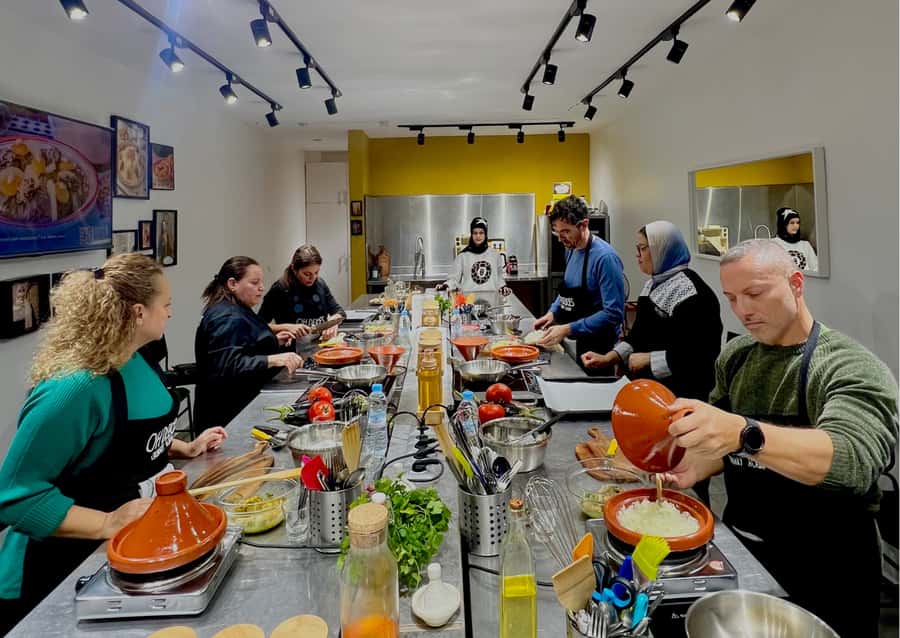
The best part of the class is not simply learning that Moroccan food uses spices. You learn how small changes in seasoning affect the whole dish.
Moroccan cooking often depends on balance: savory and sweet, warm spices and fresh herbs, rich sauces and sharp preserved ingredients. The chef can show you how spices are added, combined, and given time to work. You also get to handle ingredients that may be unfamiliar outside Morocco.
One particularly useful detail is preserved lemon. In a lemon chicken tagine, it brings a salty, sharp flavor that is different from adding fresh lemon juice at the end. Fermented butter is another unusual ingredient you may encounter. These are the kinds of details that help a dish taste Moroccan rather than simply resembling a generic stew with cumin.
The class also gives you a chance to ask what can be substituted at home. You receive recipes to take with you, and the instruction includes tips for repeating the dishes later. That matters because Moroccan cooking can look simple on paper, yet the results depend on seasoning, timing, texture, and how much liquid is used.
Preparing starters, tagines, and bread
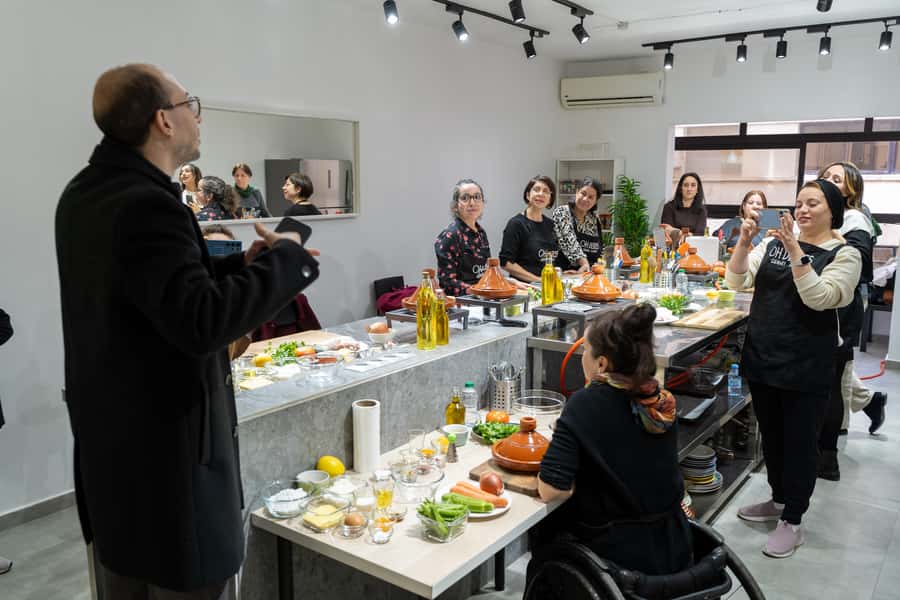
The cooking is organized around a complete meal rather than one isolated recipe. You may begin with an appetizer, then move to the main dish and dessert as different preparations require attention.
An eggplant starter is one example of the type of dish you might make. It offers a practical lesson in transforming a humble vegetable with Moroccan seasoning. The goal is not fancy presentation. It is learning how to create a dish with strong flavor from a short list of ingredients.
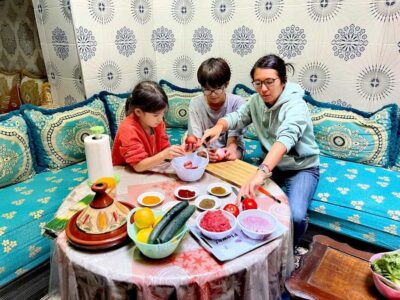
Tagine is the main attraction for many people. You might prepare chicken with preserved lemon, beef with vegetables, or another version selected by the group. The chef guides you through the seasoning and cooking process, while you take part in the work instead of watching a pot from across the room.
You may also work with couscous or msemen. Couscous connects to Morocco’s wider food culture and is useful for anyone who wants to recreate a complete meal at home. Msemen, a layered Moroccan flatbread, is more hands-on. Shaping and folding dough can take patience, but that is precisely why it is worth learning from someone who does it regularly.
Pastilla may also appear among the possible dishes. It combines pastry with a filling and sweet-savory seasoning, so it gives you a different lesson from a slow-cooked tagine. Since the menu can vary, ask early if a particular bread or pastry is your priority.
A few more Morocco runs to hold up against each other
- Moroccan Cooking Class & Marrakech Market Visit with Chef Khmisa
★ 5.0 · 1,504 reviews - Half-Day Cooking Class with Local Chef Laila in Marrakech
★ 5.0 · 952 reviews - Marrakech: Pottery Workshop with Moroccan Tea
★ 4.8 · 756 reviews - Marrakech: Moroccan Cooking Class with a Local Family
★ 4.9 · 668 reviews
Making dessert, then sitting down to eat
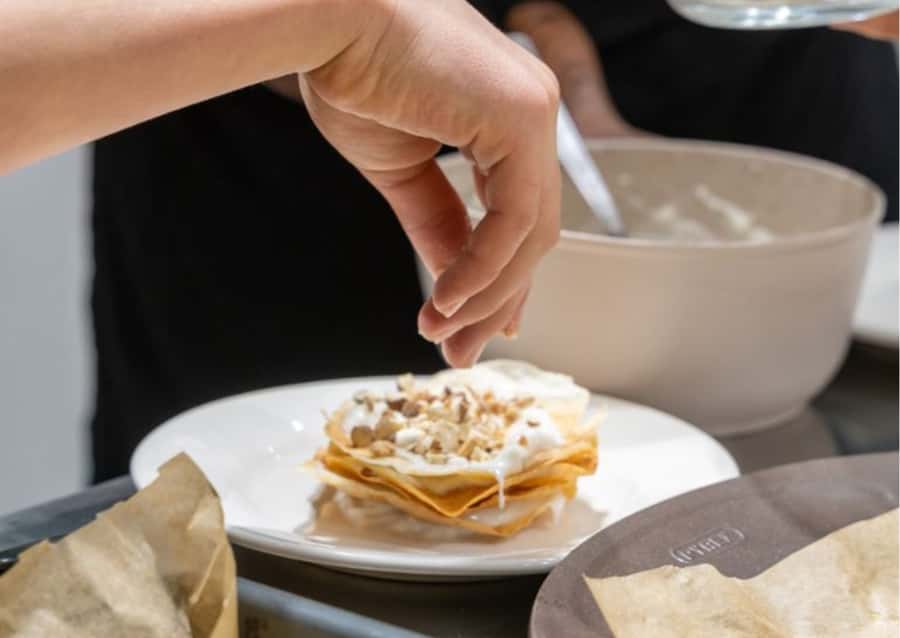
The class includes a dessert, often a Moroccan pastry or another traditional sweet. This final cooking stage helps turn the session into a full meal rather than a savory workshop with a token snack.
Dessert can be a useful place to notice Moroccan preferences for sweetness, spice, nuts, pastry, and fragrant ingredients. The exact recipe is not fixed, so your experience may differ from another group’s. That flexibility keeps the class workable, but it also means you should not book expecting one named dessert every time.
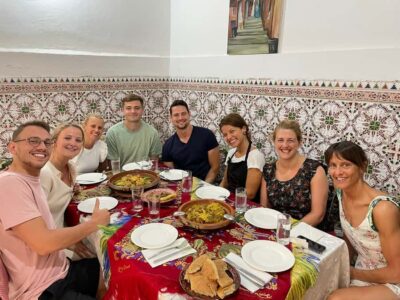
Once the cooking is finished, you sit down and eat what the group has prepared. This is one of the strongest reasons to choose a class over a food tour. You do not just taste a dish and move on. You understand the work behind it, then get to judge the result yourself.
The meal includes Moroccan mint tea. Tea and conversation provide a relaxed finish, with stories about the food and time to compare notes with the other participants. You should expect a generous meal. People have described leaving full, so do not plan a large dinner immediately afterward.
What the small group changes
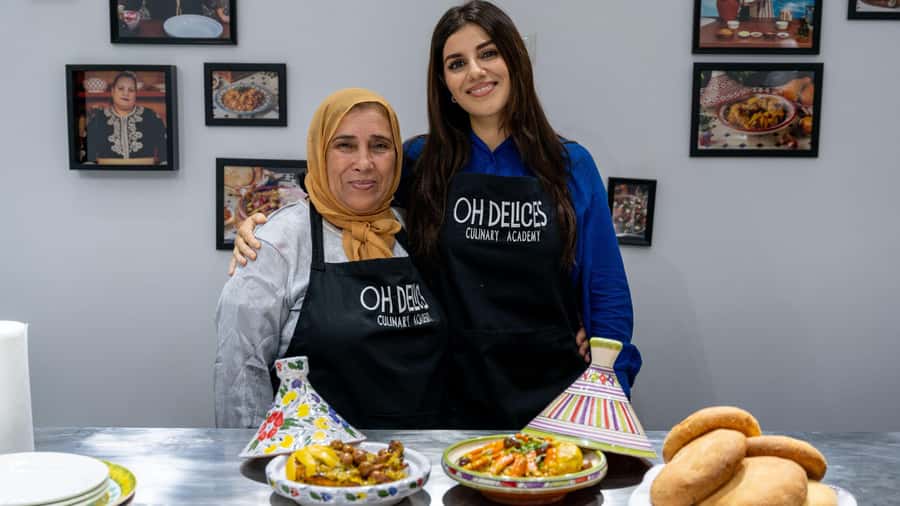
The limit of 10 people is a real advantage. Cooking classes become frustrating when a large crowd gathers around one cutting board, while half the room waits for a turn. A group of this size gives you a better chance to handle ingredients and ask for help.
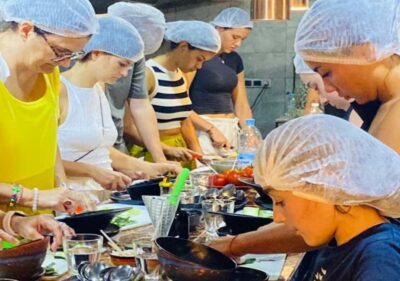
The experience can feel especially social for couples, families, and solo visitors. You are working toward one shared meal, which makes conversation easier than it can be on a standard sightseeing tour. The atmosphere has been described as relaxed and fun, with the chefs and assistants keeping the work moving.
There is still a small-group tradeoff. If everyone wants a different menu, the class may need to compromise. Some tasks may also be shared rather than completed entirely by one person. If you want private, highly personalized instruction, ask about the arrangement before booking, though the advertised format is a small shared class.
The people who make the class work
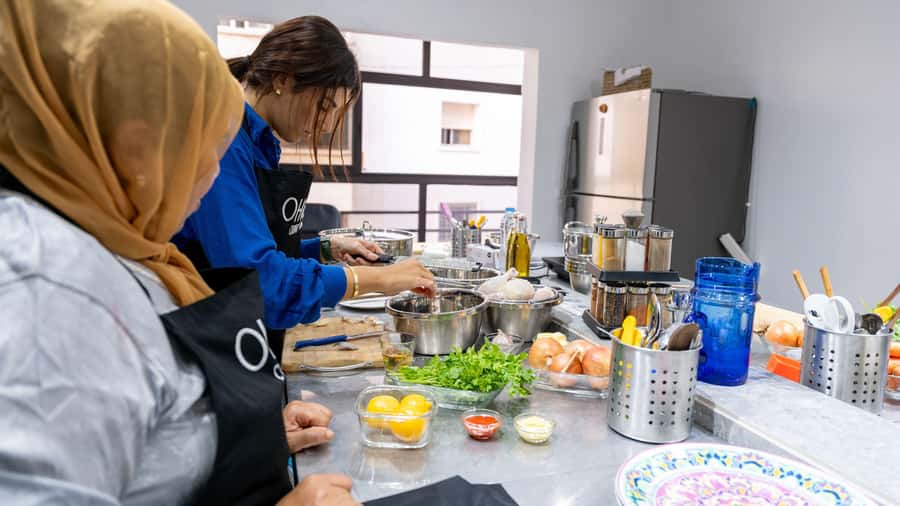
The strongest praise centers on the chefs and assistants. Chef Loubna is known for organized instruction and a warm manner. Chef Najat has received particular praise for guiding participants through an eggplant starter, beef tagine, and pastry dessert.
Hannane and Fatimah have also been praised for creating an easygoing class and keeping the session on track. Translators Malak and Oumaima help bridge language gaps and explain both the cooking steps and cultural context.
The presence of a translator is more than a minor convenience. Moroccan cooking involves many small judgments, such as how much spice to add or how a dough should feel. Clear translation lets you ask why a step matters, not just copy the motion.
The class is available in Arabic, English, and French. English and French sessions may include a translator, so tell the provider your language needs and any dietary restrictions in advance.
Is $65 a fair price in Rabat?
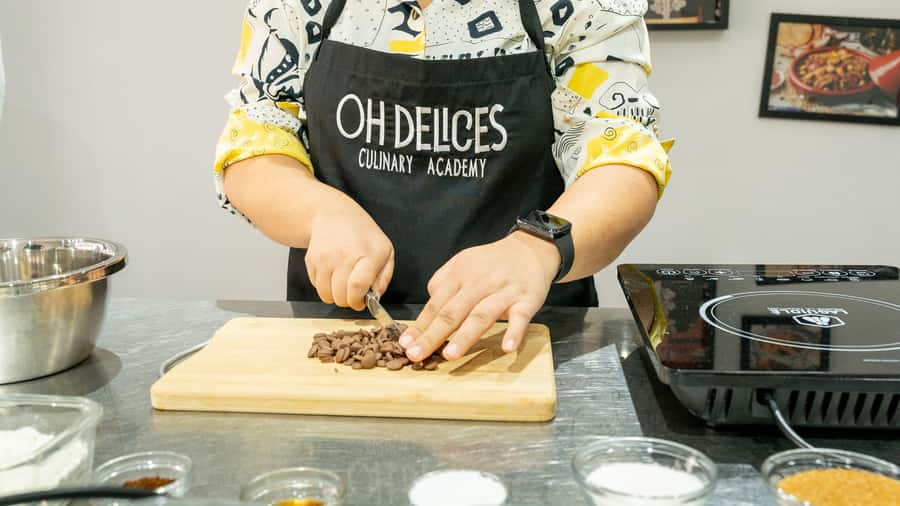
At $65 per person, this is not the cheapest way to eat in Rabat. A simple local meal will cost less. But the comparison is not quite fair, since the price covers three hours of instruction, all ingredients, kitchen equipment, a full meal, tea, and take-home recipes.
I consider it good value if you want an activity as well as food. You are paying for access to local techniques, unusual ingredients, chef support, and the chance to repeat the recipes after your trip. The meal alone is only one part of the experience.
The value is strongest for first-time visitors who want a practical introduction to Moroccan cuisine. It is also useful for home cooks who already know the basics but want to understand preserved lemon, fermented butter, tagine seasoning, or Moroccan breads.
The value is weaker if you mainly want a quick lunch, a private class, or a guaranteed list of dishes. Transport is extra, and the menu may change. Those are small drawbacks, but they should be part of your calculation.
Who should book this cooking class?
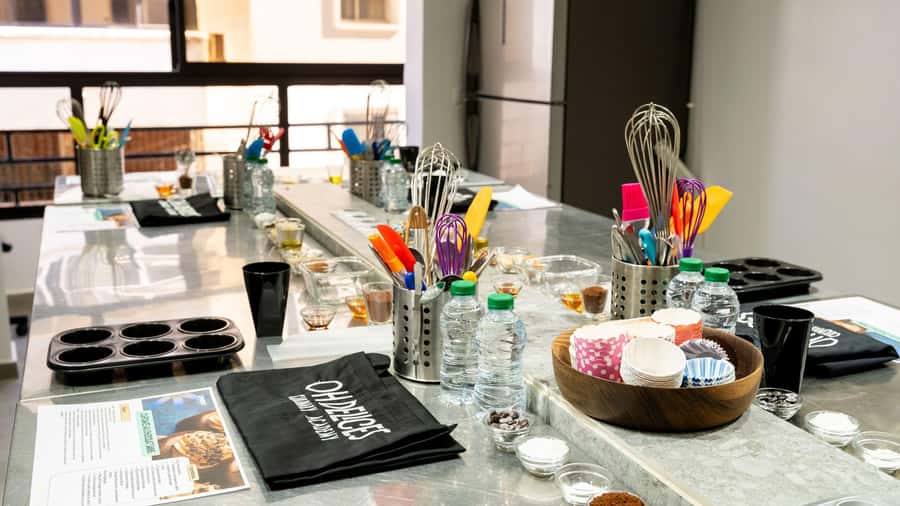
I would recommend it to couples looking for a shared activity, solo visitors who want an easy way to meet people, and families who enjoy hands-on experiences. Beginners should feel comfortable, since the instruction is designed for different skill levels.
It also suits anyone who wants more than a photograph of Moroccan food. You learn why the dishes taste as they do, and the recipes give you a way to continue the experience at home.
You may want to think twice if you dislike group activities, have strict dietary needs that you have not discussed in advance, or prefer a fixed itinerary. The chefs can adjust the session, but the details depend on the group and available ingredients.
Book with comfortable shoes and cooking clothes. If possible, avoid wearing an outfit you plan to use for the rest of your trip. Spices can cling to fabric, and one participant found the smell lingered for days. A small odor-removing spray would not be a bad addition to your packing list.
Should you book it?
Book this class if you want a friendly, practical introduction to Moroccan food in Rabat. The combination of expert chefs, translation support, unusual ingredients, a small group, and a full meal makes $65 reasonable.
I would choose it early in a Rabat visit, when the recipes can help you understand menus and markets afterward. Just accept that the menu is flexible, arrange your own transport, and notify the academy about dietary needs before the class.
You can cancel up to 24 hours in advance for a full refund, and you can reserve now and pay later. Those policies make it easier to fit the class into a changing Morocco itinerary.
FAQ
How long does the cooking class last?
The class lasts three hours.
How much does the class cost?
The price is $65 per person.
What food might I prepare?
Possible dishes include tagine, couscous, msemen, pastilla, traditional breads, appetizers, and Moroccan desserts. The exact menu can change according to the group.
Is a meal included?
Yes. You eat the meal prepared during the class, and Moroccan mint tea is included.
Are ingredients and cooking equipment provided?
Yes. All ingredients and cooking equipment are included.
What languages are available?
The class is available in Arabic, English, and French. English and French classes have translator support.
Is the class wheelchair accessible?
Yes, the cooking class is wheelchair accessible.
Just listed around Morocco
- 3 Days To Merzouga Desert★ 5.0 · 19 reviews
- 3 Days Shared Sahara Desert Tour From Marrakech★ 5.0 · 78 reviews
- 1 night Camel Treking in Merzouga Desert Luxury Camp★ 5.0 · 132 reviews
- 3 Days Sahara Desert Trips From Marrakesh★ 5.0 · 176 reviews
- 3 Days Sahara Tour from Marrakech to Merzouga Dunes★ 5.0 · 29 reviews
- trip of your dreams in 3 days and 2 nights in the desert★ 5.0 · 36 reviews
- 3 Days Private Tour to Merzouga Desert from Marrakech★ 5.0 · 77 reviews
- 3 Day Sahara Desert Tour From Marrakech★ 5.0 · 49 reviews
Cooking Classes, compared.
Traditional Moroccan Cooking Class & Market Visit
Read our review →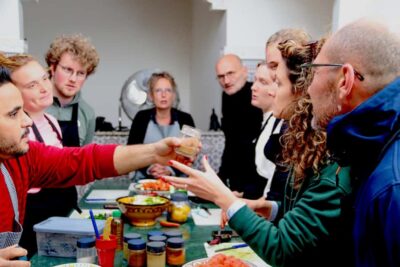
Moroccan Dishes Cooking Class with a Local Chef
Read our review →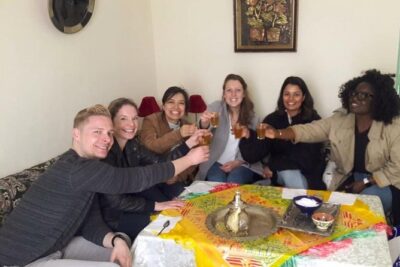
Moroccan Cooking Class & Marrakech Market Visit with Chef Khmisa
Read our review →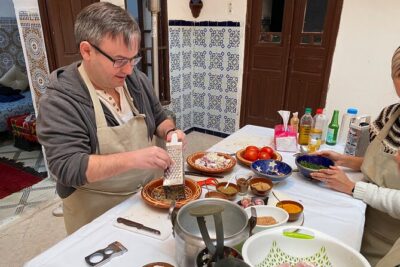
Half-Day Cooking Class with Local Chef Laila in Marrakech
Read our review →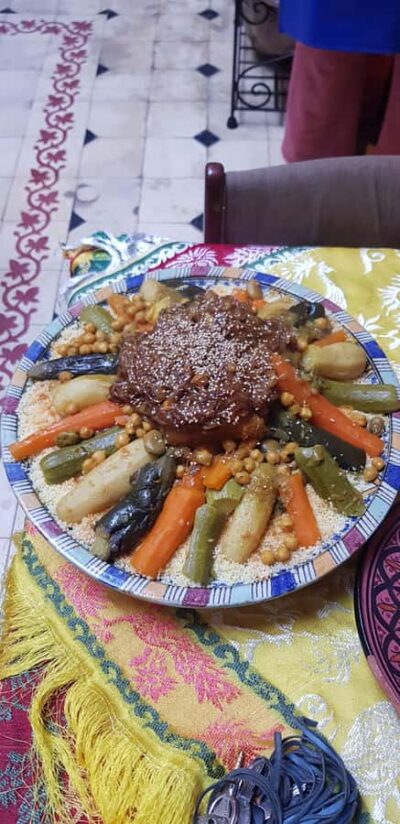
Browse the lists this tour appears in