
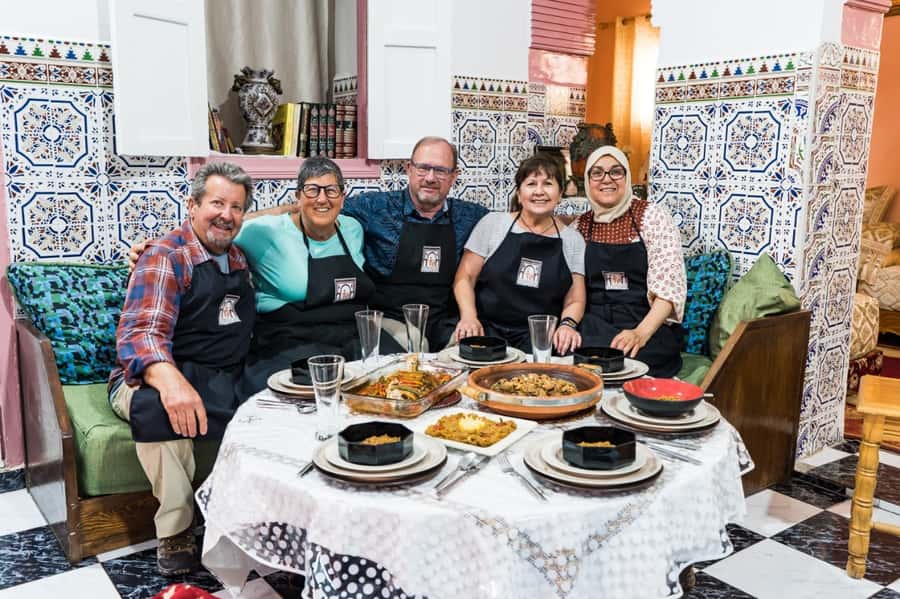
Reviewed · COOKING CLASSES
Rabat: Cooking Class in a Family Home
Morocco tastes better at home. This four-hour Rabat experience combines a local market visit with hands-on cooking in a family kitchen, giving you more than a standard restaurant meal. I especially like the chance to choose fresh ingredients with your host and the warm family setting led by Imane and her mother-in-law, a former chef for ambassadors. The one drawback is that transportation is not included, so you must reach the meeting point at Hopital Moulay Youssef Tramway station yourself.
I also like that the menu can respond to your preferences, rather than forcing every participant into the same dish. The group is limited to eight, which should make it easier to ask questions, take notes, and work at the stove. At $72 per person, it is not the cheapest meal in Rabat, but the market visit, four-hour lesson, three-course meal, drinks, and family welcome give it fair value for a food-focused outing.
In This Review
- Key points at a glance
- Meeting at Hopital Moulay Youssef
- The market comes before the recipe
- Entering a family home in Rabat
- Building a three-course Moroccan menu
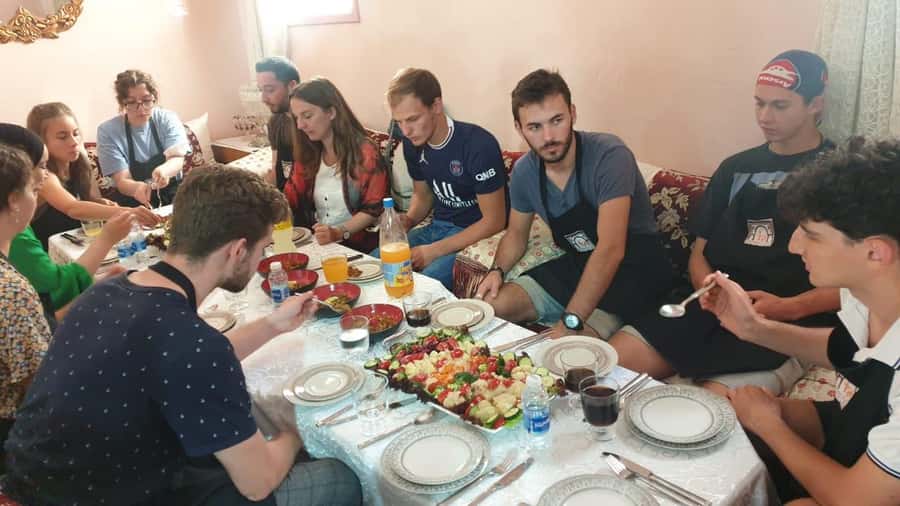
- Eating what you helped prepare
- What $72 buys you
- Who will enjoy this most
- Practical advice before you book
- Should you book the Rabat family cooking class?
- FAQ
- Where does the cooking class meet?
- How long does the experience last?
- What is included in the price?
- Is transportation included?
- How many people can join the group?
- Which languages are available?
- Can I help choose what we cook?
- Can friends join only for the meal?
- Can I cancel for a full refund?
Key points at a glance
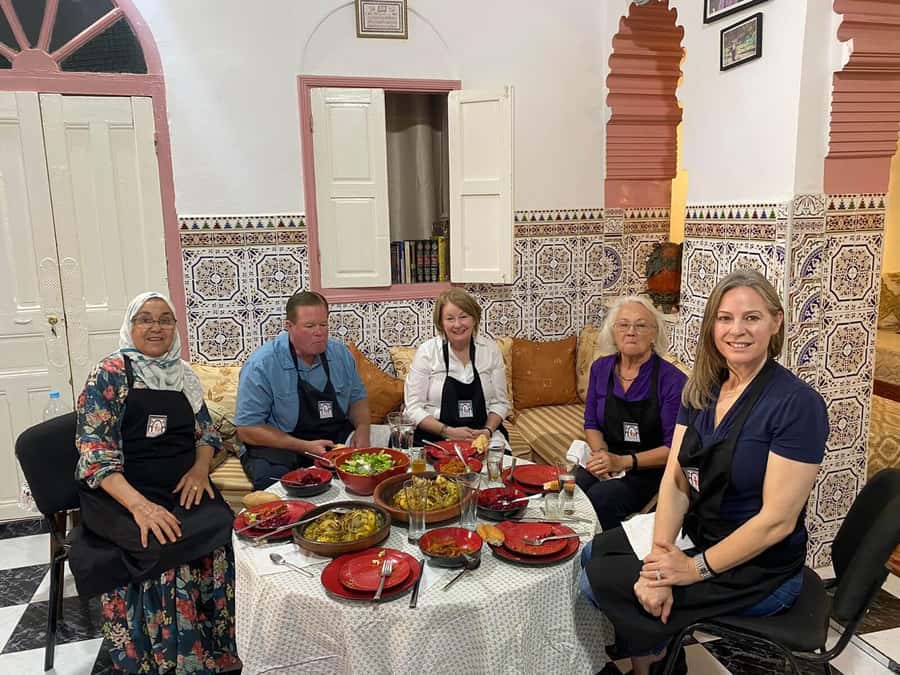
- Shop before you cook: Walk through a neighborhood market and help select the ingredients used in your meal.
- Learn in a real family kitchen: The class takes place in a historic family home, not a purpose-built cooking studio.
- Choose your menu: Your preferences help shape the dishes, with Moroccan couscous and chicken tagine among the meals prepared.
- Expect more than recipes: You can learn practical techniques, watch the cook measure by instinct, and receive full recipes for later.
- Save room for dessert: One memorable option is Moroccan millefeuille made with paper-thin market-bought pastry, orange blossom, and saffron.
- Finish around the table: The cooking ends with a home-cooked meal, tea or coffee, and bottled water.
Meeting at Hopital Moulay Youssef
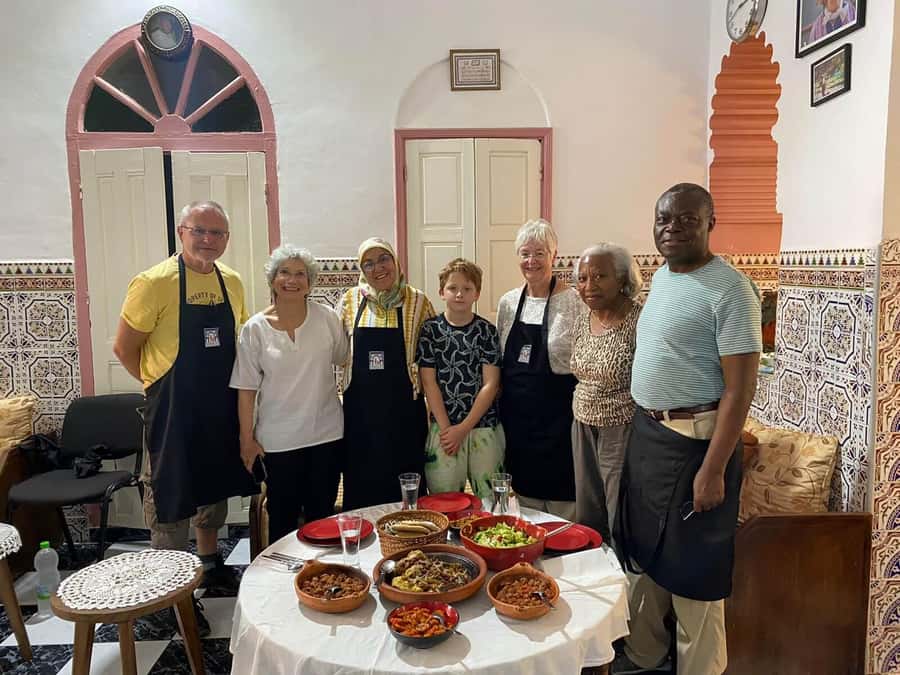
Your morning or afternoon begins at the Hopital Moulay Youssef Tramway station in Rabat. Transportation is not part of the experience, so plan your route before you set out. This meeting point is useful if you are already using the tram, but you should allow enough time to find the correct station entrance and meet your host without rushing.
The activity lasts four hours. That is long enough to include shopping, preparation, cooking, eating, and tea, but it is still a manageable half-day plan. I would avoid scheduling a major museum visit or train departure immediately afterward. Moroccan cooking often rewards patience, and you will enjoy the meal more if you are not watching the clock.
French and English are offered. The small group limit of eight matters here. In a larger class, a market walk can become a follow-the-leader exercise and kitchen work can turn into watching someone else chop. With fewer people, you have a better chance to handle ingredients, ask about customs, and see what is happening in the pot.
More cooking classes in Morocco:
- Marrakech: Moroccan Cooking Class with Pickup
★ 4.6 · 1,862 reviews - Marrakech: Traditional Moroccan Cooking Class & Market Visit
★ 4.8 · 1,861 reviews - Marrakesh: Moroccan Dishes Cooking Class with a Local Chef
★ 5.0 · 1,615 reviews
The market comes before the recipe
The market visit is one of the strongest parts of this experience because it gives the meal a sense of place. Rather than arriving at a kitchen where every ingredient has already been measured, you walk through a local neighborhood market and help buy what you will use.
Your host explains ingredients, food customs, and local habits as you shop. You can also discuss your preferences and decide what kind of menu suits you. This makes the market more than a quick shopping stop. It is the point where you begin to understand how Moroccan cooking starts with what looks good and fresh that day.
The ingredients are not simply scenery. You see the produce before it is cleaned, seasoned, and transformed. That helps connect a finished tagine or salad with the basic foods behind it. You also get the chance to ask about unfamiliar items before they appear on your plate.
The shopping portion does have a practical limit. The information does not promise a particular market, a fixed menu, or a set list of dishes for every departure. Your meal can change according to your preferences and what you choose with the host. If you have strong food dislikes, allergies, or dietary needs, explain them before shopping so the menu can be planned clearly.
Entering a family home in Rabat
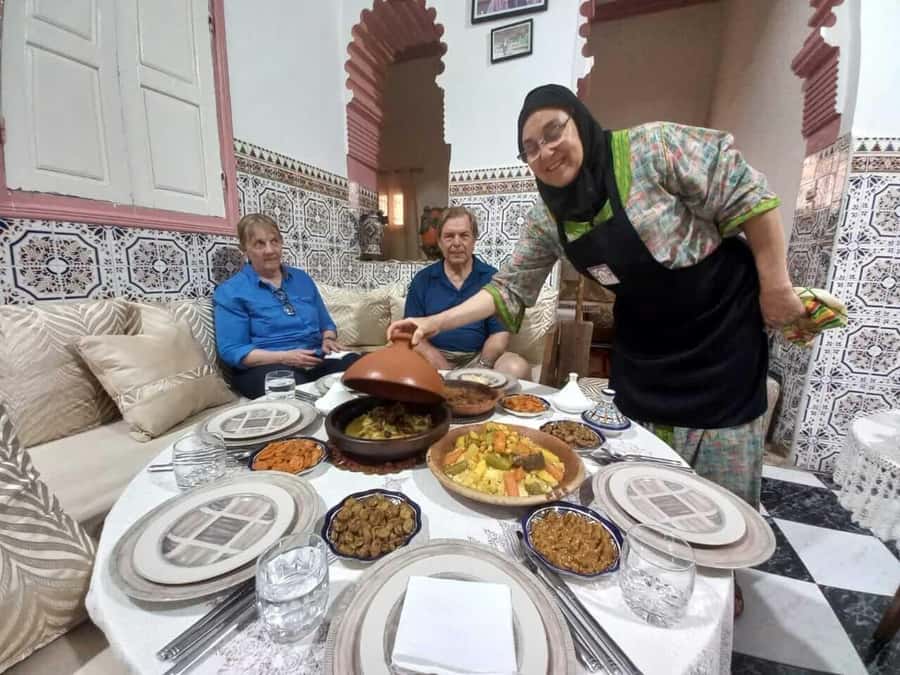
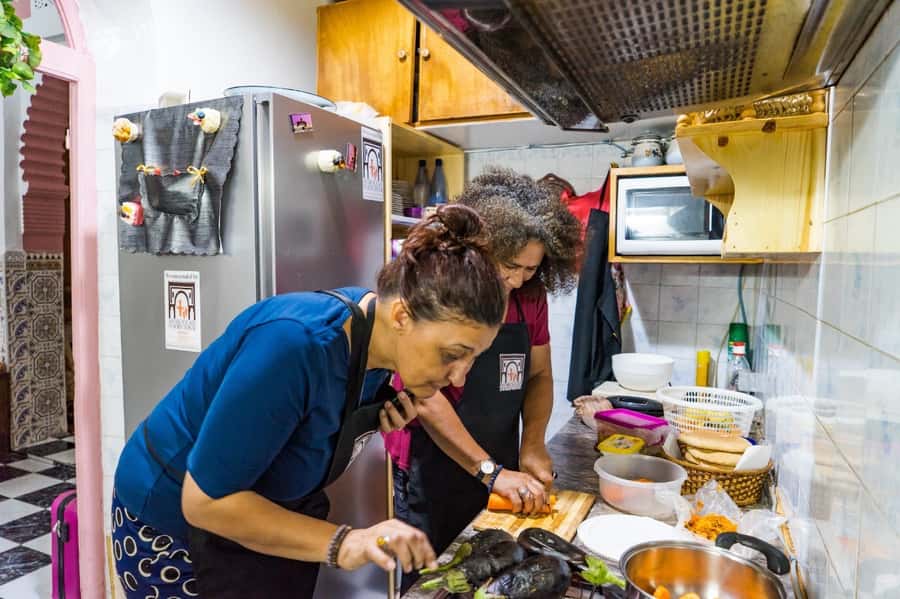
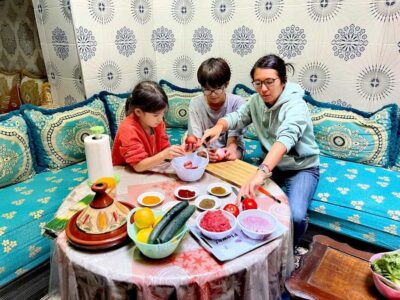
After the market, you continue to a historic Moroccan family home. This change of setting is important. You are not only learning a recipe; you are seeing how cooking fits into a family space and how hospitality shapes the meal.
The cooking is hosted by Imane and her mother-in-law. The older cook is described as a former chef for ambassadors, which adds serious professional experience to an otherwise personal setting. The combination is appealing: you get the comfort of a home kitchen with guidance from someone who has worked at a high level.
The mood is meant to be social and active. You join the cooking rather than sit at a counter while a teacher performs every step. You may chop, season, assemble, and help with the different courses. The exact tasks will depend on the dishes selected and the size of the group.
One useful detail from the experience is the contrast between formal recipes and practical cooking instinct. The cook may add a bit of this and a bit of that, as many experienced home cooks do. You receive full recipes, but you also see how a dish is adjusted by taste, texture, and judgment.
That is valuable if you want to cook Moroccan food at home later. A written recipe tells you quantities. A kitchen lesson can show you what the mixture should look like, when a spice has opened up, or how a finished dish should feel. The available information does not specify every technique, so do not expect a professional cooking-school syllabus. This is a family-centered lesson with real food at its heart.
Building a three-course Moroccan menu
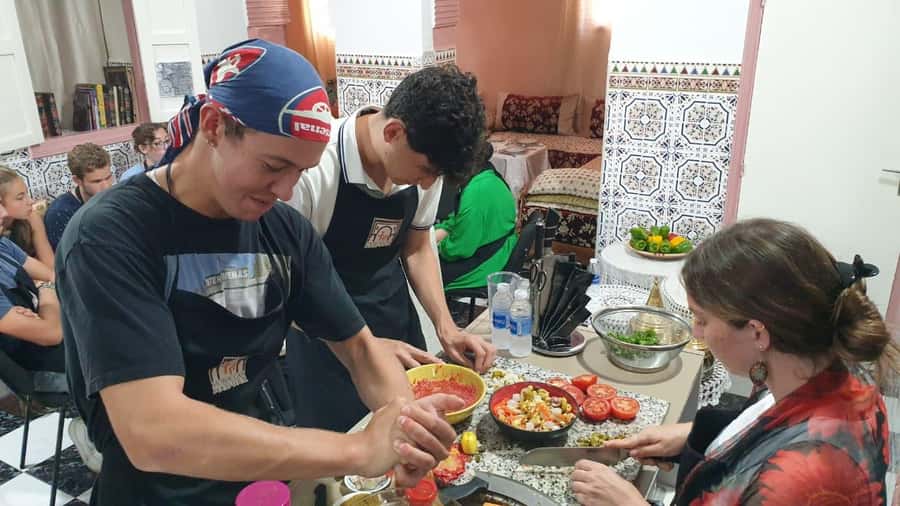
The experience includes a full three-course menu, with drinks served alongside it. Because your preferences help shape the menu, you might prepare different dishes on different dates.
Couscous is one reported main course. In Morocco, couscous has a strong place in weekly family life, and one menu followed the tradition of eating it on Friday. Preparing it in this setting gives the dish cultural context that you would not get from ordering a plate at a restaurant.
Chicken tagine is another example. A tagine is both the name of the cooking vessel and the slow-cooked dish associated with it. In the class, you can expect to take part in preparing a seasoned chicken dish, though the exact ingredients and method can vary with the selected menu.
Appetizers may include cooked vegetables such as eggplant and peppers. One menu involved removing the skins, chopping the vegetables, and combining them with several spices before serving them with bread. This kind of starter shows how Moroccan cooking can turn humble produce into a dish with plenty of character.
Dessert may be simpler, such as fruit salad with freshly pressed orange juice, or more involved. A particularly unusual option is a Moroccan millefeuille made with custard, orange blossom, and saffron. The pastry itself is bought at the market, where it is made before your eyes from flour, water, and salt. The sheets are extremely thin, almost transparent, then cut into rounds, fried, and layered.
That pastry lesson may be the most memorable part for anyone curious about technique. It is not the familiar French millefeuille copied into a Moroccan kitchen. It is a local preparation with its own texture and process. Ask questions and take notes as you go, since this is the sort of detail that is easy to forget once you are back home.
A few more Morocco runs to hold up against each other
- Moroccan Cooking Class & Marrakech Market Visit with Chef Khmisa
★ 5.0 · 1,504 reviews - Half-Day Cooking Class with Local Chef Laila in Marrakech
★ 5.0 · 952 reviews - Marrakech: Pottery Workshop with Moroccan Tea
★ 4.8 · 756 reviews - Marrakech: Moroccan Cooking Class with a Local Family
★ 4.9 · 668 reviews
Eating what you helped prepare
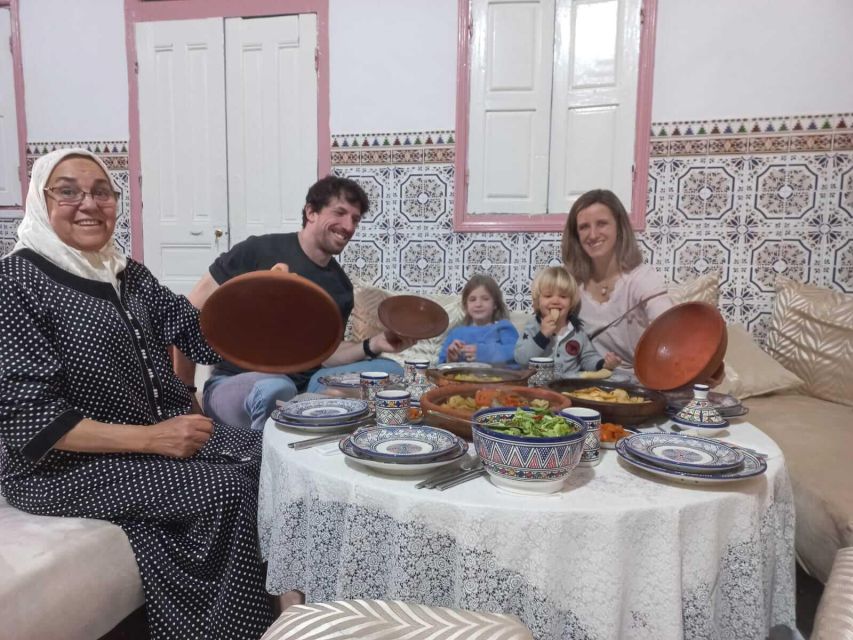
The meal is served after the cooking, from appetizers through dessert. This timing gives the class a satisfying shape: shop, prepare, sit down, eat. Your food is not a token sample. The experience includes the full menu you helped create.
The family setting also changes the pace. You are eating in a home with your hosts rather than simply checking off a restaurant reservation. Conversation about customs is part of the appeal, and the social side can be just as useful as the cooking lesson if you want a better sense of daily life in Rabat.
Friends can join the meal after the cooking class for an additional €15 per person. This is a useful option if someone in your party wants the family meal but not the full kitchen session. The information only specifies that they may join after the class, so confirm the arrangement and supplement when booking.
Tea or coffee, bottled water, and Moroccan tea are included. The final tea is more than a drink added to the package. It gives the meal a familiar Moroccan closing ritual and leaves room for more conversation after the plates are cleared.
What $72 buys you
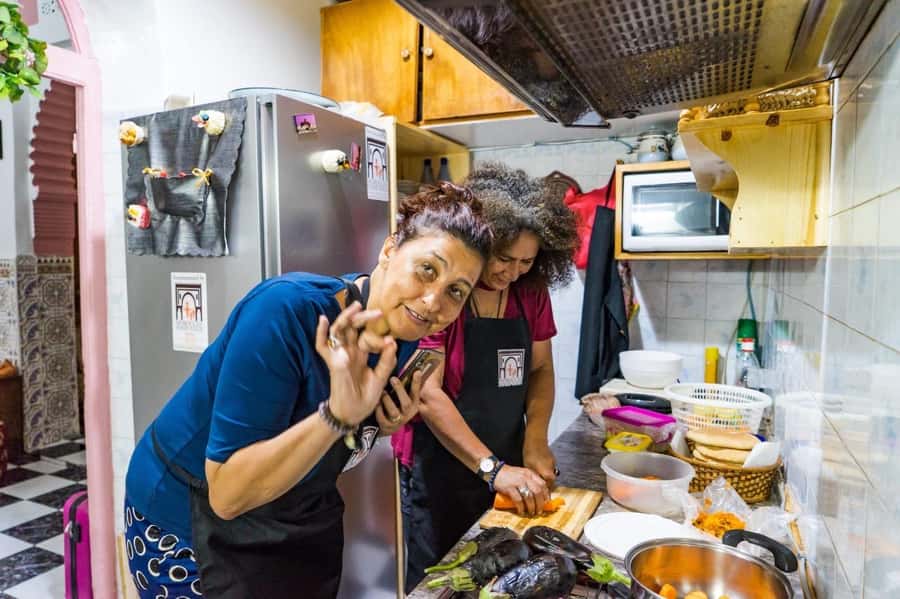
At $72 per person, the price should be judged against the whole four-hour experience, not just the cost of lunch. You are paying for a market visit, a guided shopping experience, kitchen instruction, a three-course meal, drinks, and time in a family home. For someone who mainly wants a cheap meal, it will feel expensive. For someone who wants food, culture, and personal contact in one outing, the price is easier to justify.
The group size improves the value. A maximum of eight participants keeps the class small enough for interaction without making it a private lesson. You may still share tasks with other participants, but you should have more access to the cook than in a large commercial class.
The price does not include transportation. That is the main extra cost to plan for, though the meeting point is at a tramway station. The activity also offers free cancellation up to 24 hours before the start and a reserve-now, pay-later option, which can help if your Rabat schedule is still changing.
Who will enjoy this most
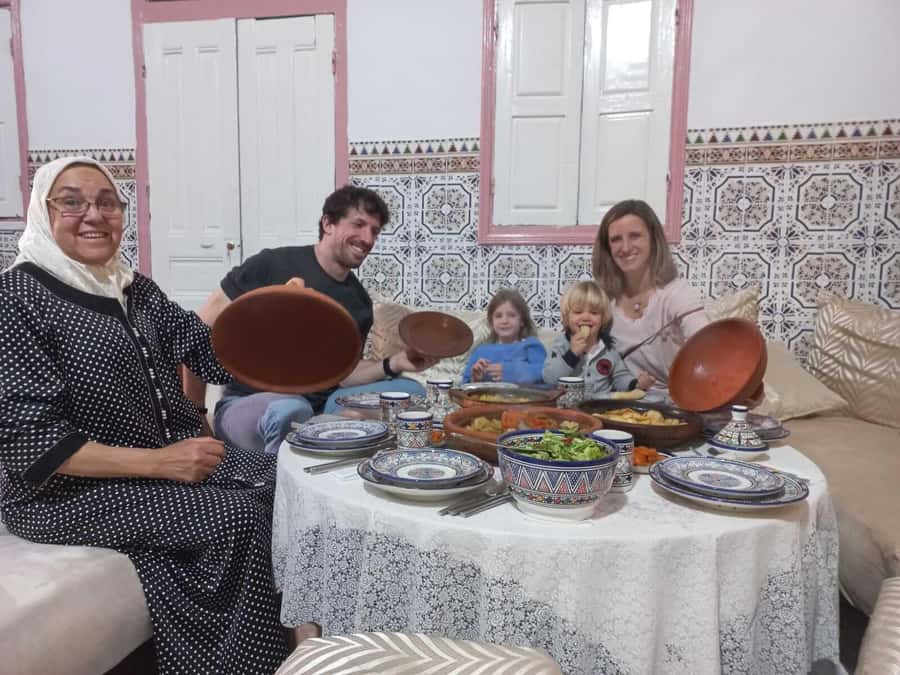
I would recommend this experience to you if food is one of the main reasons you travel. It suits curious eaters who want to know how Moroccan dishes are made, not just photograph a finished plate.
It is also a good choice for first-time visitors who want a gentle introduction to Moroccan customs. The market, family home, meal, and tea create a clear cultural arc without asking you to spend a full day on a formal tour.
Families and small groups may appreciate the flexible menu and the option for friends to join the meal afterward. The cooking itself may not suit someone who wants to remain completely passive. You should expect to participate, listen, and spend time in a working kitchen.
It may be less suitable if you need a tightly fixed menu, a private class, or extensive specialist instruction. The format is friendly and personal rather than highly structured. That is part of its charm, but it also means you should be comfortable with a meal shaped by the host, the market, and your preferences.
Practical advice before you book
Wear clothes and shoes that are comfortable for a market walk and kitchen work. The supplied information does not give a dress code or accessibility details, so ask the provider directly if you have mobility needs or require a specific setup.
Tell the host about food preferences before the market visit. Since you help decide what to cook, early communication can make the shopping and preparation smoother.
Bring your phone or a small notebook if you want to remember techniques. Photography and note-taking were welcomed during the cooking, and full recipes were provided. Still, a quick picture of an ingredient or pastry step can be useful when you try the dish at home.
Leave room in your schedule for the meal. Four hours includes the market and cooking, so this is not a quick class followed by a rushed snack. The best part is the unhurried transition from kitchen work to sitting around the table.
Should you book the Rabat family cooking class?
Book it if you want a personal food experience with real participation, a local market, and a family meal. Imane, her mother-in-law, and the small-group format offer a strong mix of cooking guidance and Moroccan hospitality, while the flexible menu means you are not locked into one standard recipe.
Skip it if you only want a fast meal, dislike group activities, or need guaranteed dishes and a formal cooking-school format. For most food-minded visitors, though, $72 is a reasonable price for four hours that connect shopping, cooking, eating, and conversation. The Moroccan millefeuille, Friday couscous tradition, and chance to learn in a family kitchen make this more distinctive than a restaurant meal alone.
FAQ
Where does the cooking class meet?
The meeting point is at the Hopital Moulay Youssef Tramway station in Rabat.
How long does the experience last?
The experience lasts four hours, including the market visit, cooking session, meal, and drinks.
What is included in the price?
The price includes the market visit, cooking session, three-course menu, tea or coffee, and bottled water.
Is transportation included?
No. Transportation is not included, so you must make your own way to the tramway meeting point.
How many people can join the group?
The group is limited to eight participants.
Which languages are available?
The host or greeter can communicate in French and English.
Can I help choose what we cook?
Yes. Your host asks about your preferences, recommends a menu, and shops with you for fresh ingredients.
Can friends join only for the meal?
Yes. Friends may join after the cooking class for the meal for an additional €15 per person.
Can I cancel for a full refund?
You can cancel up to 24 hours in advance for a full refund. You can also reserve now and pay later.
Just listed around Morocco
- 3 Days To Merzouga Desert★ 5.0 · 19 reviews
- 3 Days Shared Sahara Desert Tour From Marrakech★ 5.0 · 78 reviews
- 1 night Camel Treking in Merzouga Desert Luxury Camp★ 5.0 · 132 reviews
- 3 Days Sahara Desert Trips From Marrakesh★ 5.0 · 176 reviews
- 3 Days Sahara Tour from Marrakech to Merzouga Dunes★ 5.0 · 29 reviews
- trip of your dreams in 3 days and 2 nights in the desert★ 5.0 · 36 reviews
- 3 Days Private Tour to Merzouga Desert from Marrakech★ 5.0 · 77 reviews
- 3 Day Sahara Desert Tour From Marrakech★ 5.0 · 49 reviews
Cooking Classes, compared.
Traditional Moroccan Cooking Class & Market Visit
Read our review →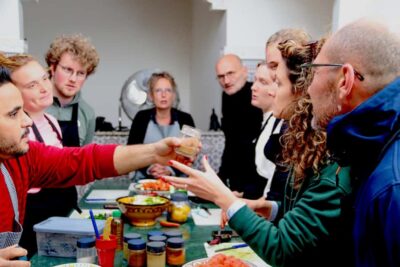
Moroccan Dishes Cooking Class with a Local Chef
Read our review →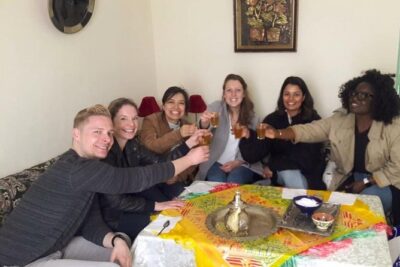
Moroccan Cooking Class & Marrakech Market Visit with Chef Khmisa
Read our review →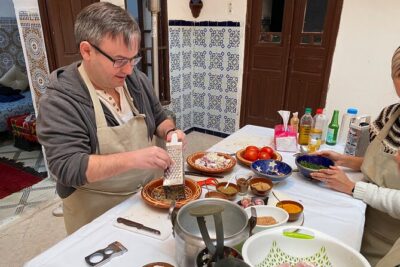
Half-Day Cooking Class with Local Chef Laila in Marrakech
Read our review →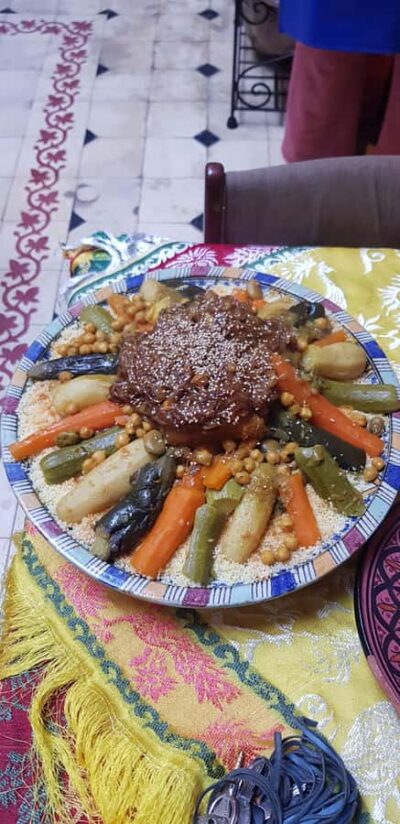
Browse the lists this tour appears in