
Reviewed · BERBER VILLAGE TOURS
Traditional Moroccan and Berber cooking classes
Food opens the door to Moroccan culture. This three-hour class in Essaouira brings you into a Moroccan home setting, where you prepare traditional dishes, learn the purpose of local spices, and sit down to eat what you have made. Khadija hosts in French, English, Arabic, and Berber, making the class a good fit for mixed-language groups. I especially like the private format and the focus on fresh, mainly local produce. I also like that you do the actual preparation instead of watching a demonstration. The main consideration is that transportation is not included, and the class begins at a specific address in Essaouira.
The class costs $58.31 per person, which is fair if you value both the meal and the instruction. You receive mint tea or spiced coffee, Moroccan cakes, bottled water, a full meal, and recipe cards to take home. The schedule is fairly short, so you should expect a focused introduction rather than a full professional cooking course.
In This Review
- Key points to know before booking
- Starting with mint tea at 21 Av. Princesse Lalla Amina
- Spices that explain Moroccan cooking
- Preparing tagine, couscous, or pastilla
- Moroccan salads with sharp, fresh flavors
- Sitting down to eat what you prepared
- Fresh produce and careful kitchen standards
- What $58.31 per person really buys
- Who will enjoy this Essaouira class most
- Should you book it?
- FAQ
- Where does the cooking class begin?
- Where does the experience finish?
- How long does the cooking class last?
- How much does the class cost?
- Is the class private?
- Which languages does the host speak?
- What food might I prepare?
- Are drinks and snacks included?
- Is transportation included?
- Can I cancel for a refund?
Key points to know before booking
- Khadija teaches in four languages: French, English, Arabic, and Berber, which helps groups communicate comfortably.
- You cook every stage of the meal: Cutting, seasoning, and using the cooking method linked to each recipe are all part of the class.
- The menu can include tagine, couscous, pastilla, and Moroccan salads: The chosen recipes shape the practical work during the session.
- The setting is private and home-based: Only your group takes part, creating a more personal meal than a large school kitchen.
- Tea and Moroccan cakes begin the experience: You learn about mint tea while enjoying a small welcome snack.
- Recipe cards are provided at the end: You have a useful reminder of what you prepared after returning home.
Starting with mint tea at 21 Av. Princesse Lalla Amina
The class begins at 21 Av. Princesse Lalla Amina in Essaouira and returns to the same meeting point. Since private transportation is not included, you need to make your own way there. The location is near public transportation, which helps if you are not staying within easy walking distance.
The first few minutes set the tone. You are welcomed in a Moroccan setting and offered small Moroccan cakes with mint tea or spiced coffee. This is not just a drink before the cooking begins. Mint tea is a central part of Moroccan hospitality, and the preparation becomes the first lesson of the day.
I like this opening because it gives you time to settle in before handling ingredients. You can learn about the method, taste the tea, and hear about the class plan without rushing straight to the chopping board. The cakes also give you a small taste of Moroccan home cooking before the main meal.
You should keep the timing in mind. The entire experience lasts about three hours, so the welcome, cooking, meal, and final discussion all share a limited amount of time. That makes the class efficient, but it also means you should not expect a long tour of Essaouira or a broad survey of every Moroccan dish.
More Berber village visits near Essaouira:
- Berber Cooking Class at a Farm in the Countryside & shopping at a rural Souk.
★ 5.0 · 18 reviews - Berber villages : Atlas Mountains Day Hike from Marrakech
★ 5.0 · 14,007 reviews - Marrakech: Balloon Flight, Berber Breakfast & Certificate
★ 4.8 · 8,164 reviews
Spices that explain Moroccan cooking
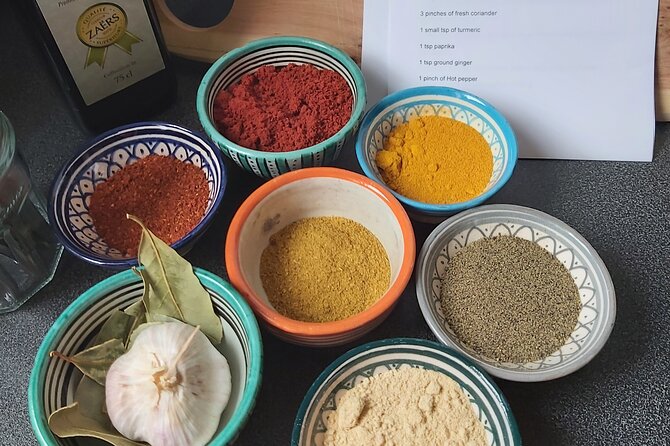
After the welcome, Khadija introduces the recipes and spices. This is one of the most useful parts of the class because Moroccan food depends on how ingredients are combined, not simply on adding heat or piling on seasoning.
You may be introduced to ras el hanout, cumin, saffron, cinnamon, preserved lemon, olives, and other condiments. The important point is that each item has a role. Some add warmth, some bring acidity, and others supply fragrance or depth to a slow-cooked dish.
Preserved lemon and olives, for example, are closely linked with classic Moroccan flavors. Cumin can give salads and other dishes an earthy note, while cinnamon may appear in both savory and sweet combinations. Ras el hanout is especially useful to understand because it is a famous Moroccan spice blend rather than one single spice.
The class does not treat spices as decoration. You learn how they fit into the recipe you are preparing. That practical link is valuable because you leave with a better sense of how to recreate the meal, rather than simply memorizing a list of ingredients.
This part should suit curious cooks who want context without a long lecture. If you already cook Moroccan food often, the lesson may feel basic. For most people visiting Essaouira, it offers a clear introduction to the flavor patterns they will encounter in Moroccan markets and restaurants.
Preparing tagine, couscous, or pastilla
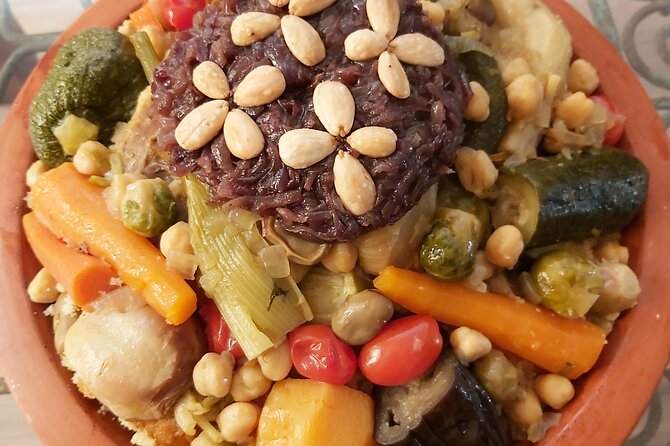
The main recipe depends on the chosen menu. Options can include tagine, couscous, pastilla, Moroccan salads, and other traditional dishes. Because the class is private, food wishes can be taken into account, as shown by the way one group’s preferences were considered.
That flexibility is helpful, but you should confirm the menu and any dietary needs before the class if they matter to you. The information provided does not set out a fixed dish for every booking, so the exact cooking project can vary.
If the class focuses on tagine, you can expect to work through the preparation and seasoning before the dish simmers. Tagine cooking is built around gradual cooking and well-balanced seasoning. It rewards patience, even if your session gives you only a short introduction to the method.
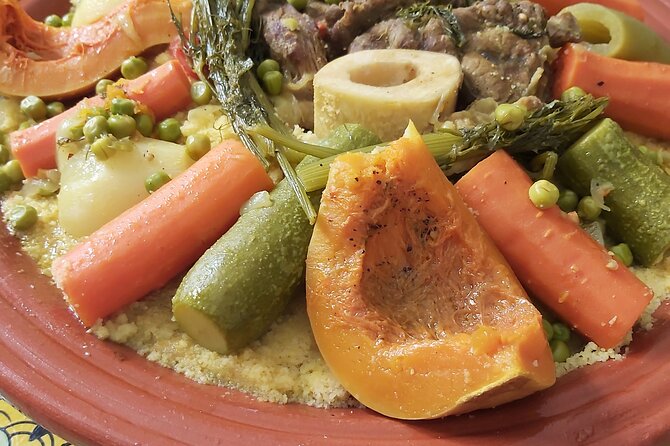
Couscous brings a different technique. The grains are steamed, so the lesson can show you how couscous differs from a quick pour-and-stir preparation. The process is more hands-on than simply buying prepared couscous and adding a topping.
Pastilla offers another style of cooking, with attention to crisp pastry. It is a useful choice if you want to see how Moroccan cooking moves between savory fillings and delicate textures. The class description specifically highlights the crispy finish, so expect the method to matter as much as the ingredients.
The strong point here is participation. You are involved from cutting the ingredients through seasoning and cooking. That makes the class feel like a shared meal prepared with guidance, not a staged show where you watch someone else do the work.
Moroccan salads with sharp, fresh flavors
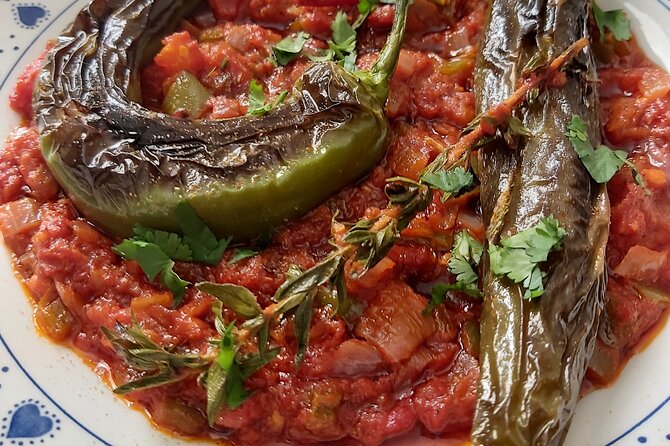
Salads are included among the possible dishes, and the class may cover familiar preparations such as carrot salad with chermoula, aubergine zaalouk, or taktouka. These are not just leafy side dishes. They show how Moroccan cooks use vegetables, herbs, spices, and careful cooking to build flavor.
Carrot salad with chermoula can introduce you to a bright herb and spice mixture. Aubergine zaalouk shows what happens when eggplant is cooked until soft and combined with seasoning. Taktouka provides another vegetable-based option and helps round out a meal that might otherwise center on a single tagine or couscous dish.
I like the inclusion of salads because they make the class more useful at home. A large main course may require special equipment or a long cooking time, while a Moroccan salad can be easier to repeat in an ordinary kitchen. These dishes also give the meal contrast, with fresh and cooked elements sharing the table.
The exact combination is not fixed in the details provided, so do not assume you will prepare every salad named. Think of the examples as possible parts of the menu rather than a promise that all will appear in one three-hour class.
More cooking classes in Essaouira:
- l’Atelier – Moroccan Cooking Workshop in Essaouira
★ 5.0 · 110 reviews - Traditional Moroccan Cooking Class
★ 5.0 · 81 reviews - Essaouira: Traditional Family Style Moroccan Cooking Class
★ 5.0 · 58 reviews - Essaouira Cooking Class
★ 5.0 · 26 reviews
Sitting down to eat what you prepared
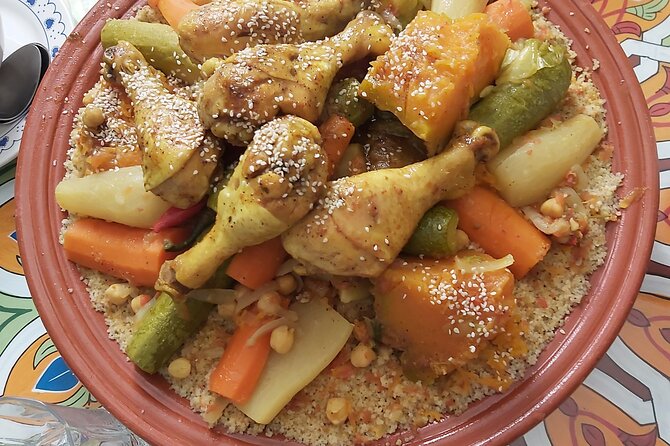
Once the cooking is finished, you sit together and eat the meal. This shared table is a major part of the experience. It turns the class into a cultural exchange, with time to talk about Moroccan traditions, food, and daily life.
The private setting matters here. Only your group takes part, so the meal should feel more personal than a large class with several unrelated parties. One particularly warm account describes being welcomed into Khadija’s home, feeling at ease, and sharing the meal around a beautifully arranged table.
That kind of setting can be more memorable than the recipe alone. You see how food connects with hospitality, conversation, and respect. Khadija’s stated aim is to share Moroccan culture through food, and the class appears built around that idea rather than around speed or commercial production.
The meal also lets you judge the recipes as finished dishes. During preparation, you notice individual spices and techniques. At the table, you understand how those parts work together. For many people, this is the point when the class becomes more than a cooking lesson.
Still, the atmosphere depends partly on your own group. A private class is ideal for couples, families, and friends who want conversation. If you prefer a lively group workshop with strangers, this format may feel quieter.
Fresh produce and careful kitchen standards
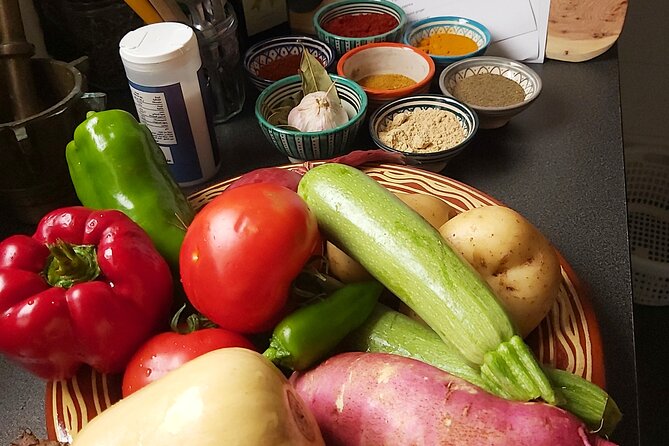
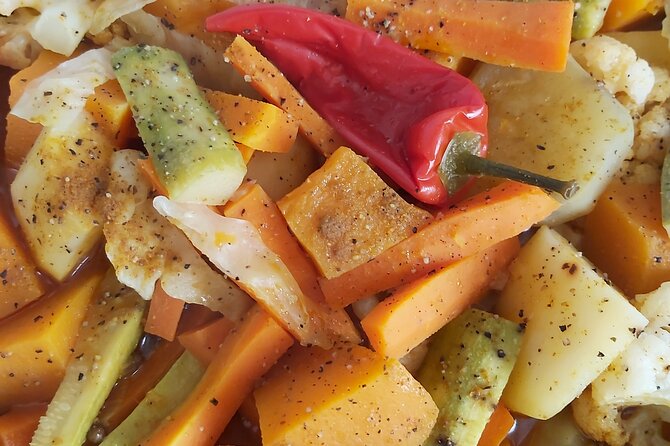
Khadija places emphasis on fresh, quality produce, with most ingredients sourced locally. That choice has two benefits for you. First, fresh ingredients usually make the cooking more satisfying. Second, local food gives the class a stronger connection to Essaouira and Morocco rather than relying on an imported, generic menu.
Using mainly local produce is also presented as a way to reduce the class’s carbon footprint. You do not need to treat that as the main reason to book, but it is a sensible part of the experience. Food feels more connected to place when the ingredients reflect what is available nearby.
Cleanliness and hygiene receive particular attention throughout the class. That reassurance matters in a hands-on cooking experience, especially when several people are cutting, seasoning, and sharing food. The details do not specify individual kitchen procedures, so I would not infer more than that, but the focus on hygiene is clear.
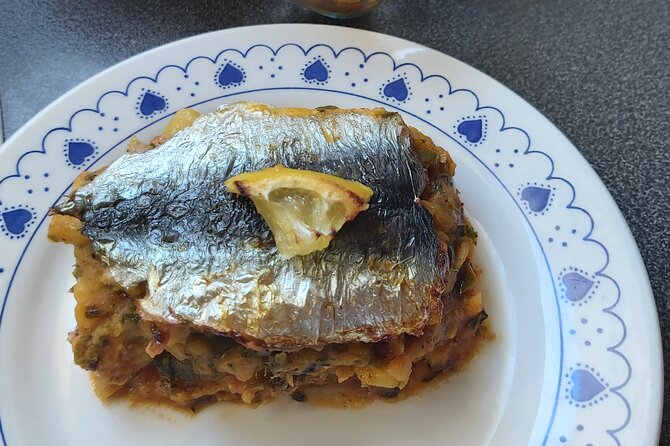
The food is designed to be enjoyed, not simply demonstrated. The description includes fresh or cooked starters, a main course, and homemade desserts as possible menu elements. The exact menu can vary, so you should ask ahead if dessert or a particular starter is important to you.
What $58.31 per person really buys
At $58.31 per person, the price is not simply paying for a meal. It covers about three hours of instruction, hands-on preparation, refreshments, a shared meal, and recipe cards. For a private experience, that is a reasonable package, especially if you are traveling as a small group and want direct attention.
You receive mint tea or spiced coffee, Moroccan cakes, bottled water, and the food prepared during the class. The recipe cards add lasting value because they give you a practical chance to repeat the dishes at home.
The value is less convincing if you only want an inexpensive lunch. You could likely find a cheaper meal elsewhere in Essaouira. The point here is learning how the food comes together and spending time in a Moroccan home setting.
The perfect five-star score from 40 ratings and a 100 percent recommendation rate support the idea that the class delivers on hospitality, instruction, and food. The strongest praise focuses on Khadija’s warm welcome, clear explanations, private setting, and the pleasure of eating the finished dishes.
That praise should not make you ignore the limits. The class is only about three hours, the menu is not fully fixed, and transport is not included. You also need to be comfortable taking part in food preparation. This is a good value for someone who wants an active cultural experience, not for someone seeking a long culinary course.
Who will enjoy this Essaouira class most
I would recommend this class to couples, families, and small groups who enjoy eating and want a more personal connection with Morocco. The private format is especially useful for people who want to ask questions freely or who do not enjoy cooking in a crowded class.
It also works well for mixed-language groups. Khadija speaks French, English, Arabic, and Berber, so language should be less of a barrier than in many local cooking experiences.
Food-focused visitors will get the most from the spice lesson and the chance to prepare a dish from start to finish. It is also a good choice for anyone who wants to carry a piece of the trip home in the form of recipes rather than only photographs.
I would think twice if you have very limited time in Essaouira and need an activity close to your hotel, since you must reach the meeting point yourself. I would also confirm the menu in advance if you have dietary restrictions or a strong preference for tagine, couscous, pastilla, or a particular salad.
Service animals are allowed, and the meeting point is near public transportation. The experience is private, but it requires a minimum number of participants and can be affected by poor weather. If the operator cancels for either reason, you are offered another date or a full refund.
Should you book it?
Book this class if you want to cook, talk, and eat in a private Moroccan setting. The best reasons are Khadija’s multilingual teaching, the hands-on work, the careful use of local produce, and the chance to share a meal around the same table.
Skip it if you only want a quick tasting or a fixed restaurant-style menu. For everyone else, $58.31 is a fair price for three hours of practical cooking, hospitality, refreshments, a full meal, and recipes you can use after Essaouira.
You can cancel for a full refund up to 24 hours before the start time. For the best experience, confirm the menu and make sure you can reach 21 Av. Princesse Lalla Amina without private transport.
FAQ
Where does the cooking class begin?
The class begins at 21 Av. Princesse Lalla Amina, Essaouira 44000, Morocco.
Where does the experience finish?
The activity ends back at the same meeting point.
How long does the cooking class last?
The class lasts approximately three hours.
How much does the class cost?
The listed price is $58.31 per person.
Is the class private?
Yes. Only your group participates in the activity.
Which languages does the host speak?
The host speaks French, English, Arabic, and Berber.
What food might I prepare?
Possible dishes include tagine, couscous, pastilla, Moroccan salads, and homemade desserts. The exact menu can vary.
Are drinks and snacks included?
Yes. The experience includes mint tea or spiced coffee, bottled water, and small Moroccan cakes.
Is transportation included?
No. Private transportation is not included. The meeting point is near public transportation.
Can I cancel for a refund?
Yes. You can cancel at least 24 hours before the start time for a full refund. Changes or cancellations made less than 24 hours before the start time are not accepted for a refund.
More Workshops in Essaouira
- Essaouira: Surf Lessons
★ 4.9 · 412 reviews - Kitesurfing Lessons in Essaouira Beach
★ 5.0 · 206 reviews - Group Kitesurfing lesson with a Local in Essaouira Morocco
★ 5.0 · 175 reviews - Surf Lesson with local surfer in Essaouira Morocco
★ 5.0 · 166 reviews
Just listed around Essaouira
- Private Kitesurf Lesson in Essaouira Morocco★ 5.0 · 38 reviews
- How To Be A Real Moroccan Chef★ 5.0 · 101 reviews
- Group Kitesurfing lesson with a Local in Essaouira Morocco★ 5.0 · 175 reviews
- Surf Lesson with local surfer in Essaouira Morocco★ 5.0 · 166 reviews
- Surf Rental★ 5.0 · 31 reviews
- Individual Lessons of Kite Surf in Essaouira★ 5.0 · 113 reviews
- Essaouira: Private Transfer from or to Essaouira Airport★ 5.0 · 17 reviews
- The Sunday Market in Had Draa & Local Food Tasting.★ 5.0 · 33 reviews
Berber Village Tours, compared.

Berber villages : Atlas Mountains Day Hike from Marrakech
Read our review →
Balloon Flight, Berber Breakfast & Certificate
Read our review →
Majorelle Garden, YSL, and Berber Museum Entry
Read our review →
Hot Air Balloon Flight with Berber Breakfast
Read our review →
Atlas Mountains, Berber Villages and Three Valleys all inclusive
Read our review →
Atlas Mountains Hot Air Balloon Ride from Marrakech with Berber Breakfast and Desert Camel Experience
Read our review →
Atlas Mountains, Berber Villages, Agafay & Camel Ride
Read our review →
Balloon Flight, Berber Breakfast, and Camel Ride
Read our review →Browse the lists this tour appears in