
Reviewed · COOKING CLASSES
Essaouira: Traditional Family Style Moroccan Cooking Class
Food is often the best way into a place. This four-hour Essaouira experience takes you from a local market to the home kitchen of Hussein and Khadija, where you help choose ingredients, prepare a three-course Moroccan meal, and sit down to eat it. I like the market visit because you are not simply handed a recipe, and I like the warmth of the family setting, where the evening includes conversation, tea, and a look at everyday Moroccan life. The main consideration is value: at $72 per person, some people may find the price high, especially since one participant felt there was not enough hands-on cooking time.
Still, this is much more than a standard restaurant meal. You choose what to cook with guidance, learn Moroccan techniques in a real home, and finish with food you helped prepare. Hussein and Khadija receive especially warm praise for their kindness, clear explanations, and generous hospitality, and the class is also suitable for vegetarians.
In This Review
- Key points at a glance
- Starting at Pharmacie Bouhaira at 6 PM
- Choosing ingredients in a local Essaouira market
- Entering a Moroccan family kitchen
- Learning Moroccan dishes, including tagine
- Sitting down to the three-course meal
- Moroccan tea and conversation
- Is $72 a fair price?
- Who should book this Essaouira cooking class?
- Should you book it?
- FAQ
- Where does the cooking class meet?
- How long does the activity last?
- What is included in the price?
- Is the menu vegetarian friendly?
- What language is the class conducted in?
- Can I cancel for a refund?
- Can I reserve without paying immediately?
Key points at a glance
- A market-led menu: You visit a local neighborhood market first, discuss your preferences, and help select fresh ingredients.
- Hussein and Khadija’s family home: The cooking takes place in a private Moroccan home rather than a formal school kitchen.
- A full three-course meal: Your menu includes food from the first course through dessert, followed by Moroccan tea.
- Strong family welcome: The atmosphere is social and personal, with time for conversation about Moroccan culture and daily life.
- Tagine techniques you can take home: Several participants especially enjoyed learning to cook tagine, and one even bought a tagine afterward.
- Useful evening timing: The meeting point is Pharmacie Bouhaira, with departure at 6 PM, making this an easy evening plan in Essaouira.
Starting at Pharmacie Bouhaira at 6 PM
The class begins at Pharmacie Bouhaira, with departure scheduled for 6 PM. You should arrive 15 minutes early, giving yourself time to find the meeting point without turning the start of the evening into a small navigation contest.
The timing matters. This is an evening activity, so it fits neatly after a day walking Essaouira’s old streets, visiting the port, or spending time by the sea. The four-hour length means you should expect to finish around 10 PM, though the exact pace can depend on the menu and the group.
The meeting point is not described as the family home itself. Instead, Hussein meets you there and leads the next part of the experience. One participant staying in central Essaouira walked about 20 minutes to the meeting point from a riad, so check your own route and allow extra time if you are coming from farther away.
The activity is offered in English, and the listed accessibility information says it is wheelchair accessible. If access needs are important for your booking, it is sensible to confirm the details in advance, since the experience includes a market stop and a home kitchen.
More cooking classes in Essaouira:
- l’Atelier – Moroccan Cooking Workshop in Essaouira
★ 5.0 · 110 reviews - Traditional Moroccan Cooking Class
★ 5.0 · 81 reviews - Traditional Moroccan and Berber cooking classes
★ 5.0 · 40 reviews
Choosing ingredients in a local Essaouira market
The first real stage of the evening is a guided walk through a local produce market. This is a useful touch because it gives the meal a beginning and a sense of place. You are not arriving at a kitchen to find every ingredient measured and waiting in little bowls. You see what is available, talk about what you enjoy eating, and help make decisions.
Your host asks about your preferences and recommends a menu. You then choose what to prepare and shop for the ingredients together. That flexibility is valuable for anyone who has dietary preferences or wants to focus on a particular Moroccan dish. The experience is vegetarian friendly, although the supplied information does not promise a particular vegetarian menu, so tell the host your needs clearly before shopping.
The market visit also gives you context that a recipe card cannot. You learn about local ingredients, food customs, and the role of fresh produce in Moroccan cooking. You might not spend a long time at every stall, but the point is to understand how the meal comes together from ordinary market shopping.
I particularly like this part for curious cooks. You can ask why one ingredient is preferred, how it is used, and what makes a dish feel Moroccan rather than simply North African in a general sense. The market is also a good place to notice the difference between buying a prepared meal and building one from scratch.
The limitation is that the experience does not provide a fixed menu in advance. That is part of its charm, but if you want to learn one exact recipe before booking, you may prefer a more structured class. The final dishes depend on your preferences, the host’s recommendations, and what is available that day.
Entering a Moroccan family kitchen
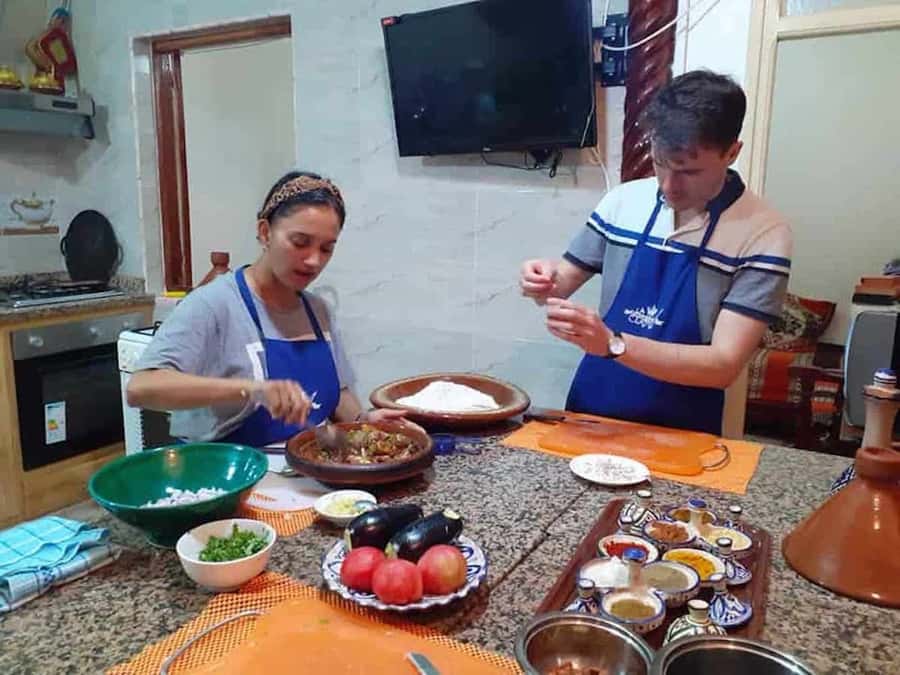
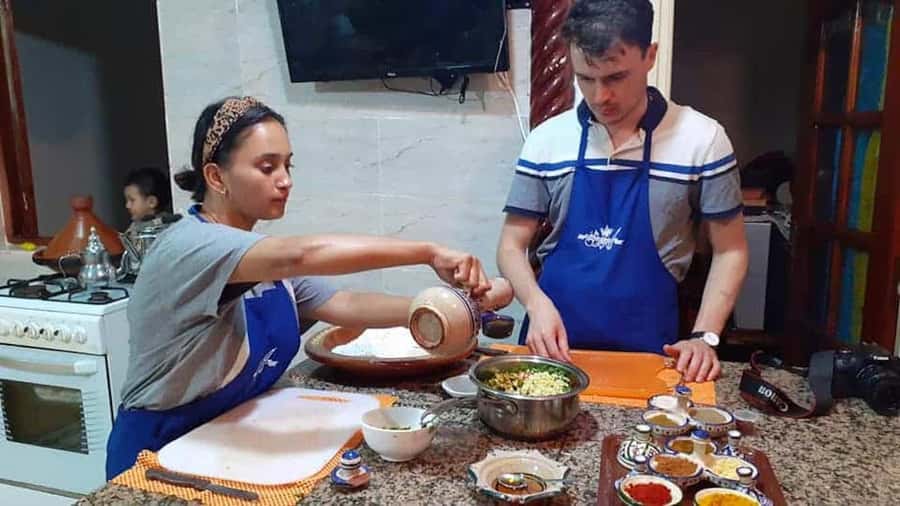
After shopping, you continue to a Moroccan family home. This change in setting is the heart of the activity. Instead of taking a seat in a purpose-built cooking studio, you are welcomed into the domestic space of Hussein and Khadija, where the meal is prepared in a more personal setting.
The supplied experience details do not specify the size of the kitchen or the number of people in each class, so you should not assume a large professional workspace. That may mean a less formal setup, but it also helps explain why the evening feels intimate and social.
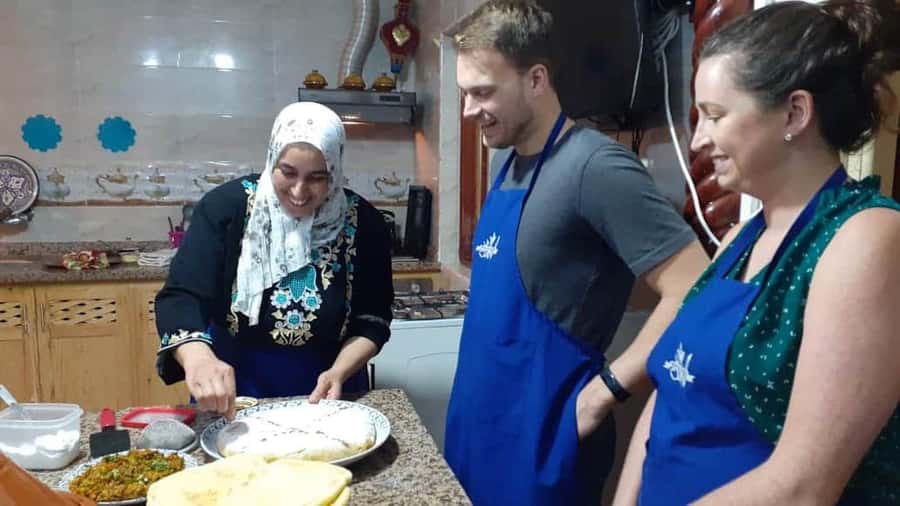
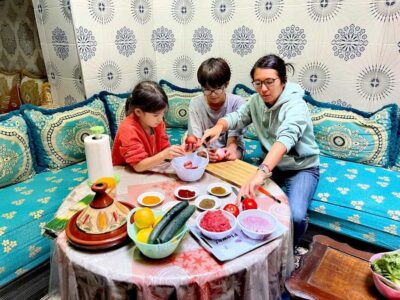
Several people found the welcome especially memorable. Hussein and Khadija are described as kind, caring, and easy to talk with. One couple was offered tea and cakes while Khadija prepared some of the food, and the evening included discussion about their lives and Moroccan culture. Another participant enjoyed playing music with them.
This is a good fit for you if the human side of food matters as much as the food itself. You are not only collecting cooking instructions. You are spending time with a family and seeing how hospitality works in a Moroccan home.
There is an important distinction here. The class is family style, but that does not necessarily mean every minute is a formal lesson. Khadija may prepare some elements while you work on others, especially when several dishes are being made at once. One participant felt that the group did not do enough cooking during the roughly three and a half hours spent at the house. That is the clearest practical criticism, and you should keep it in mind if your priority is constant hands-on practice.
Learning Moroccan dishes, including tagine
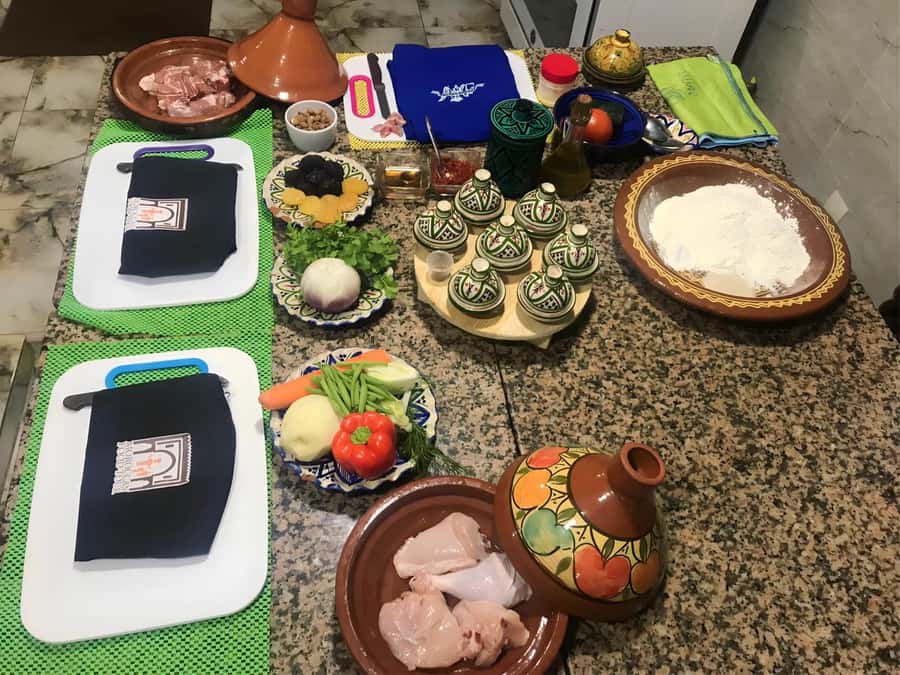
The cooking workshop focuses on Moroccan techniques and a menu selected with your input. You prepare a complete three-course meal, then eat the food you have made. The exact dishes are not fixed in the information provided, so you should think of this as a flexible Moroccan cooking evening rather than a guaranteed lesson in one named recipe.
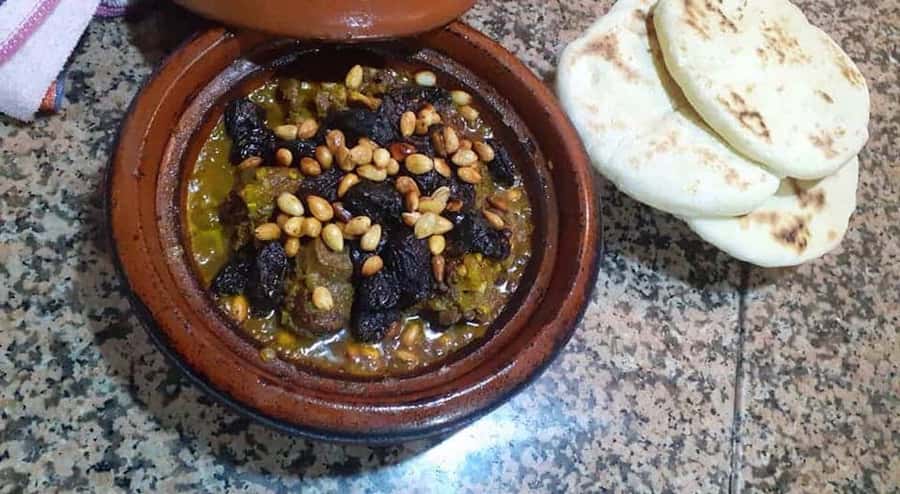
Tagine is the dish most clearly connected with the experience. Several participants singled out the tagine as a highlight, and one person enjoyed the lesson so much that they bought a tagine to take home to New Hampshire. That says something about the practical appeal of the class: the lesson can inspire you to continue cooking after Morocco.
You will want to ask questions as you go. Pay attention to how ingredients are prepared, how seasoning is balanced, and how the cooking vessel is used. If you are hoping to recreate the meal later, ask for the recipes before leaving. One participant said the hosts promised to share them, but recipes are not listed as an official inclusion, so do not treat a printed recipe book as part of the package.
The food itself receives the strongest praise. Descriptions include the best meal of a Morocco trip, fantastic food, and a tagine that was especially memorable. One family with children aged nine and eleven found the food enjoyable, and another participant noted that there was so much to eat that the group could not finish everything.
That generosity is pleasant, though it reinforces the point about cooking time. A class can feel less active if the hosts prepare a large share of the meal while you watch or assist briefly. I would book this for a balance of cooking, eating, and conversation, not for a technical chef-training session.
A few more Essaouira runs to hold up against each other
- Essaouira: Surf Lessons
★ 4.9 · 412 reviews - Kitesurfing Lessons in Essaouira Beach
★ 5.0 · 206 reviews - Group Kitesurfing lesson with a Local in Essaouira Morocco
★ 5.0 · 175 reviews - Surf Lesson with local surfer in Essaouira Morocco
★ 5.0 · 166 reviews
Sitting down to the three-course meal
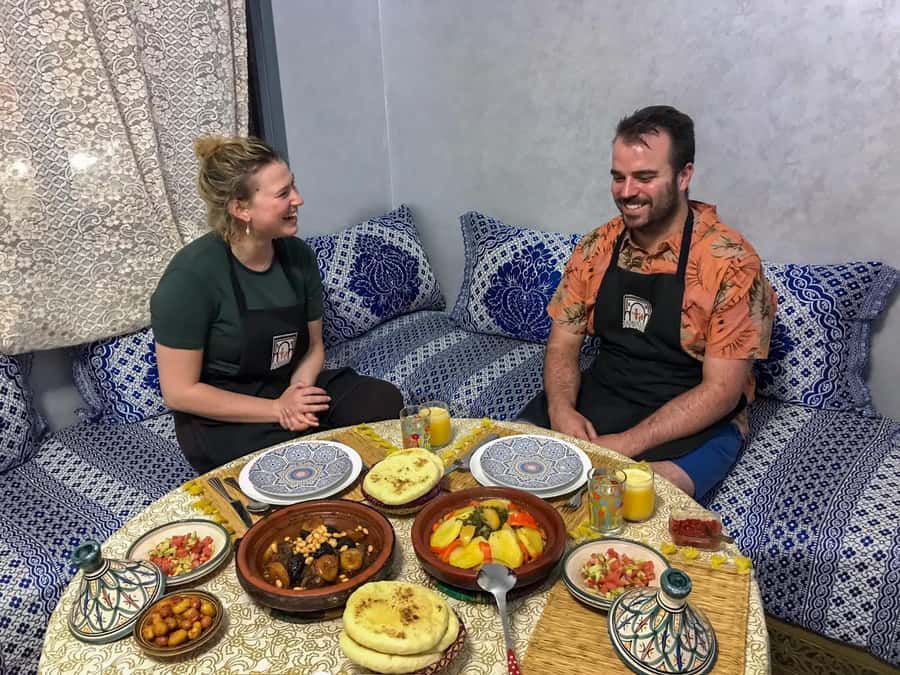
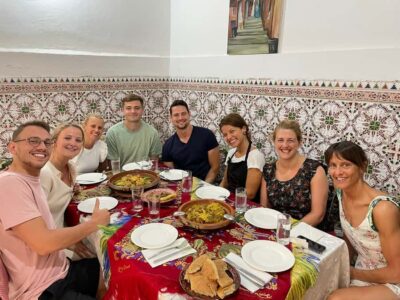
Once the cooking is done, you eat the full menu together. This is where the activity changes from lesson to shared meal, and it gives the evening a natural reward. You have seen the ingredients at the market, helped prepare them, and can taste how the separate parts work together.
The three-course format is a meaningful inclusion at this price. You are not paying only for an appetizer or a single main dish. The meal includes a beginning, main course, and dessert, with Moroccan tea to follow. The precise courses are not specified, so you should not expect a particular dessert or starter unless the host confirms it.
The home setting also changes the pace. You are likely to have more room for conversation than you would at a busy restaurant, and the food is served with personal hospitality. Many participants valued feeling welcomed into the household rather than being treated like a customer moving through a set program.
Families and couples should find this part easy to enjoy. Children can appreciate the novelty of cooking and then eating the result, although younger children may not want to participate in every preparation task. Since alcohol and drugs are not allowed, this is a family-oriented cultural evening rather than a nightlife activity.
Moroccan tea and conversation
The class ends with traditional Moroccan tea. It is a small inclusion, but it gives the evening a proper closing ritual. Tea is not just a final drink here. It creates a relaxed moment after the meal and leaves time for conversation with the hosts.
This is also when you can ask about the recipes, cooking tools, markets, and customs you encountered. The experience is at its best when you treat the hosts as people, not simply as instructors. Participants especially valued the chance to talk with Hussein and Khadija about their lives and Moroccan culture.
Do not rush this final part. The meal and tea are where the family-home format earns its keep. If you want a quick lesson with an efficient start and finish, this may feel slow. If you enjoy sitting around a table and trading stories, the pace will feel much more natural.
Is $72 a fair price?
The listed price is $72 per person. That is not a bargain cooking lesson, and one participant described a similar cost of 60 euros per person as overpriced despite enjoying the evening. The value depends on what you count as the product.
If you count only the cooking instruction, the price may feel steep, particularly if Khadija handles some preparation and you spend part of the visit watching. A formal cooking school might offer more direct practice for the money.
If you count the guided market visit, fresh ingredients, the full three-course meal, tea, an English-speaking instructor, and several hours in a family home, the price becomes easier to understand. You are paying for a cultural exchange as well as dinner. The strong food and hospitality make the cost more defensible for people who want a personal evening rather than a basic recipe demonstration.
The booking terms also reduce some risk. You can cancel up to 24 hours before the activity for a full refund, and you can reserve now and pay later. Those options are useful if your Essaouira plans are still shifting.
Who should book this Essaouira cooking class?
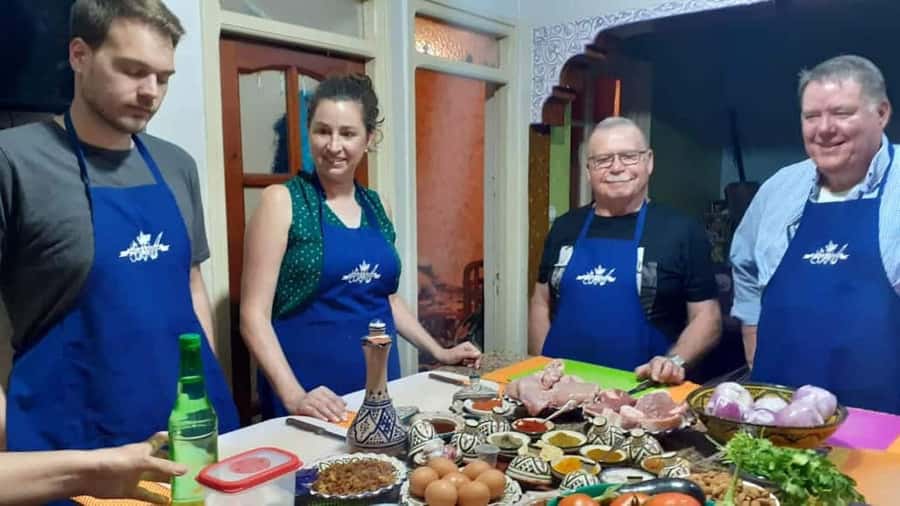
I would recommend it most strongly to:
- Couples who want a relaxed evening with local hosts
- Families with children who enjoy food and simple cultural activities
- First-time visitors who want more than restaurant meals
- Home cooks interested in tagine and Moroccan techniques
- Vegetarians who confirm their menu needs before the class
- Anyone who values conversation and hospitality as much as active instruction
You may want to choose another class if you need a tightly timed professional lesson, a guaranteed list of dishes, or several hours of nonstop cooking. The menu is flexible, and the family-home style means the evening includes watching, eating, talking, and tea.
The class is conducted in English, which helps if you want to ask detailed questions. It is also listed as wheelchair accessible, though the market and home format make it wise to confirm any specific requirements ahead of time.
Should you book it?
Book this experience if you want to share a Moroccan evening with a family, not simply follow a recipe in a classroom. Hussein and Khadija’s warmth, the market shopping, the generous meal, and the tea create a rounded introduction to food and daily life in Essaouira.
At $72, I would not call it the cheapest way to eat or cook in Morocco. But for a three-course dinner, market visit, English instruction, and personal time in a family home, it offers fair value when cultural contact matters to you. Go in expecting a social cooking experience with some demonstration, rather than a rigorous chef’s course, and you are more likely to enjoy the evening.
FAQ
Where does the cooking class meet?
The meeting point is Pharmacie Bouhaira in Essaouira. Departure is at 6 PM, and you should arrive 15 minutes early.
How long does the activity last?
The cooking class lasts four hours. Starting times may vary, so check availability when booking.
What is included in the price?
The experience includes a full three-course Moroccan menu and traditional Moroccan tea.
Is the menu vegetarian friendly?
Yes. The cooking class is vegetarian friendly. You should explain your preferences to the host when discussing the menu.
What language is the class conducted in?
The instructor speaks English, and English is the listed activity language.
Can I cancel for a refund?
Yes. You can cancel up to 24 hours in advance for a full refund.
Can I reserve without paying immediately?
Yes. The reserve-now, pay-later option lets you book your spot without paying at the time of reservation.
Just listed around Essaouira
- Private Kitesurf Lesson in Essaouira Morocco★ 5.0 · 38 reviews
- Group Kitesurfing lesson with a Local in Essaouira Morocco★ 5.0 · 175 reviews
- How To Be A Real Moroccan Chef★ 5.0 · 101 reviews
- Surf Lesson with local surfer in Essaouira Morocco★ 5.0 · 166 reviews
- Surf Rental★ 5.0 · 31 reviews
- Individual Lessons of Kite Surf in Essaouira★ 5.0 · 113 reviews
- Essaouira: Private Transfer from or to Essaouira Airport★ 5.0 · 17 reviews
- The Sunday Market in Had Draa & Local Food Tasting.★ 5.0 · 33 reviews
Cooking Classes, compared.
Traditional Moroccan Cooking Class & Market Visit
Read our review →
Moroccan Dishes Cooking Class with a Local Chef
Read our review →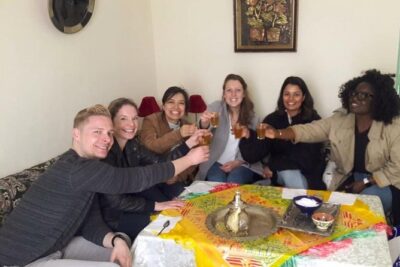
Moroccan Cooking Class & Marrakech Market Visit with Chef Khmisa
Read our review →
Half-Day Cooking Class with Local Chef Laila in Marrakech
Read our review →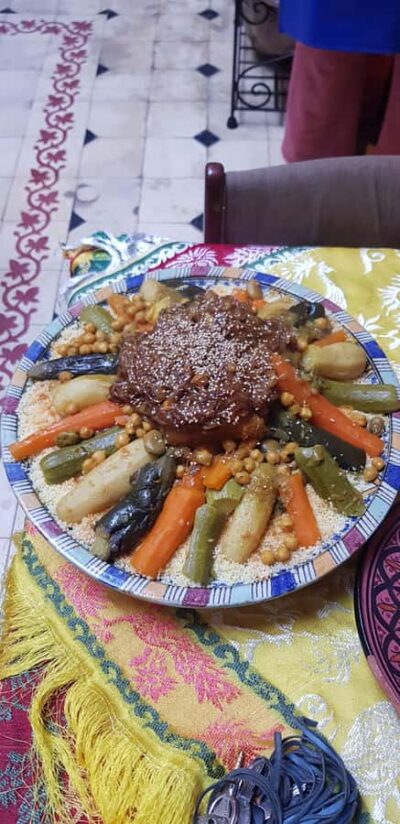
Browse the lists this tour appears in